Motorsport has changed, but many racers are still operating like it hasn’t.
There was a time when results alone could attract sponsorship. Win races, get noticed, and the backing would follow. Today, that model is largely gone. You can be quick, consistent, even winning—and still struggle to secure support. At the same time, others with average results are landing deals. That’s not because the system is broken. It’s because the game has changed.
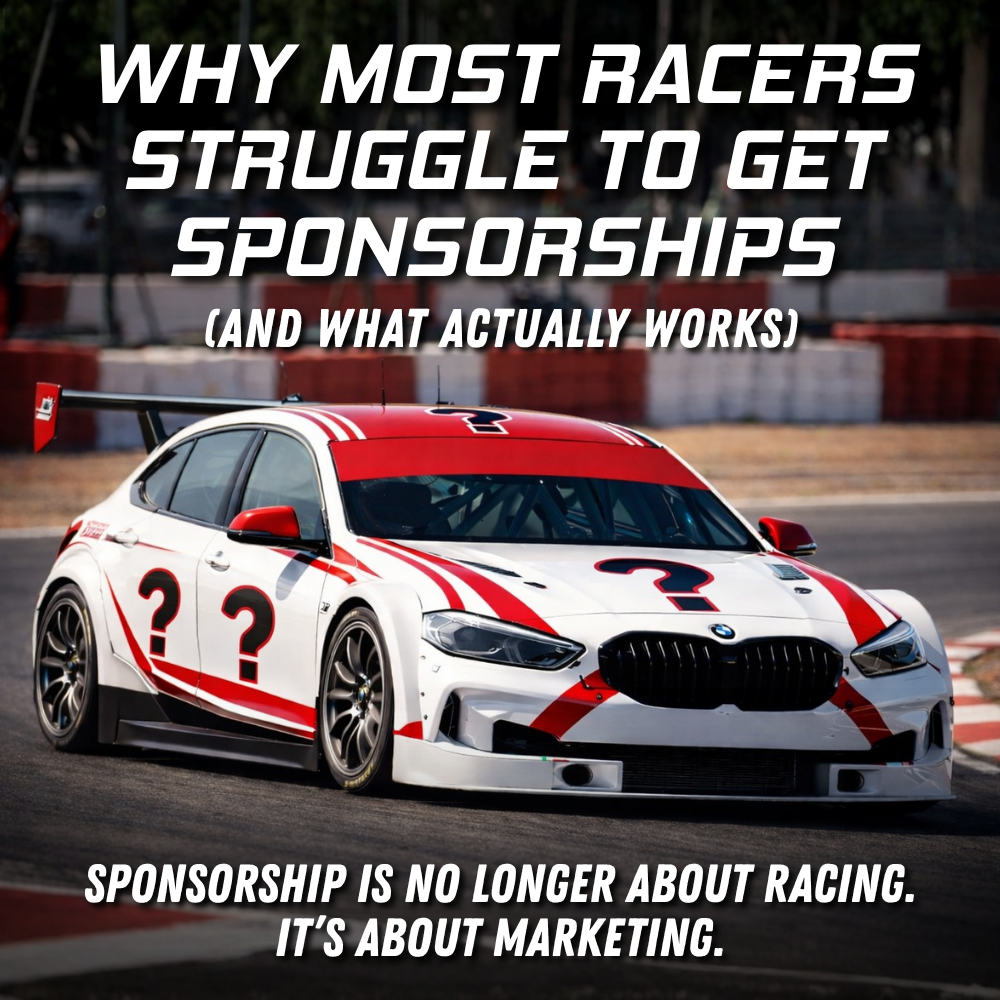
Sponsorship is no longer about racing. It’s about marketing.
The biggest mistake racers make is approaching sponsors as if they are asking for help. The typical pitch still sounds like this: give me money so I can race, and I’ll put your logo on the car. From a sponsor’s perspective, that offers very little. Businesses are not in the business of funding passion projects. They are investing in outcomes. They want exposure that leads to growth, and ultimately, sales.
The shift became very clear during COVID. When racing stopped, the expectation from sponsors didn’t. Drivers who understood the commercial side of the relationship adapted. They increased their content output, engaged more with their audience, and continued to promote their partners even without being on track. Others went quiet, waiting for racing to return. Many of them lost their sponsors. That period exposed the truth: racing was never the product. It was just the platform.
Once you understand that, the numbers start to matter in a different way. If you approach a brand for R20,000, they are not thinking about how much exposure you can give them. They are thinking about profit. If their product makes, for example, R2 per unit in profit, they need to sell around 10,000 units just to recover that investment. That’s before they make anything on top. So the real question is not whether you can put a logo on your car. It’s whether you can influence enough people to actually buy the product.
That is where most sponsorship proposals fall apart. Racers talk about visibility. Sponsors care about profitability. Those are not the same thing.
This challenge is even more pronounced in South Africa. We don’t have the consistent national exposure of series like Formula 1 or NASCAR. Track attendance is relatively low, and media coverage is limited. If your entire value proposition is based on people seeing a logo at the circuit, it simply doesn’t carry enough weight.
That’s why content has become the real product. Racing provides the raw material, but the value is created in how it’s packaged and distributed. Every event should generate content that lives far beyond race day—videos, stories, product features, behind-the-scenes moments. That content is what gives sponsors ongoing exposure and repeated engagement with an audience.
This is also why being the best driver is no longer enough. It’s not a popular idea, but it’s reality. The most visible driver often secures the sponsorship, not necessarily the fastest one. Sponsors are not evaluating lap times; they are evaluating reach, engagement, and influence. A driver with a smaller but engaged audience and consistent content can deliver far more value than a race winner with no presence off the track.
Scale adds another layer to this. Ten thousand followers might feel significant, but when you are approaching a brand with millions—or even tens of millions—of followers, your audience alone is not compelling. Large brands are not short on exposure. They are looking for something they don’t already have. That means you need to bring creativity, a clear concept, and a way to activate their product in a meaningful way. On top of that, they are receiving hundreds of sponsorship requests every year. If your proposal looks like everyone else’s, it won’t even get considered.
There is also a side of sponsorship that many overlook completely: brand risk. When a company puts their name on your car, they are associating with you directly. Your behaviour, both on and off the track, becomes part of their brand image. Actions like illegal street racing, reckless content, or public controversy don’t just reflect on you—they reflect on them. From a sponsor’s perspective, that risk can outweigh any potential upside. You are either an asset to their brand or a liability. There is very little middle ground.
Another factor that plays a major role is brand fit. Not every sponsor is the right sponsor. If your audience doesn’t align with their customer base, or your image doesn’t match their positioning, the partnership won’t deliver results. And if it doesn’t deliver results, it won’t last. The strongest sponsorships are built on alignment, where the audience, the product, and the message all make sense together.
When you put all of this together, a clear picture emerges. Sponsorship is not about asking for money. It’s about offering value. It’s about understanding the sponsor’s business, their customers, and their objectives—and then building a proposal that helps them achieve those goals.
The uncomfortable truth is this: if you can’t help a sponsor sell their product, you’re not ready for sponsorship.
The upside is that this is something you can control. You can build your visibility. You can improve your content. You can develop a clear audience and a stronger personal brand. Not everyone can be the fastest driver on the grid, but anyone can become more valuable commercially.
In today’s motorsport environment, especially in South Africa, the drivers who succeed are not just racers. They are marketers, content creators, and brand partners.
And the ones who understand that are the ones who get the deals.