“In South Africa, rodding usually begins with a bunch of guys who find old, abandoned, rusted bodies and see potential.”
That line, from the launch edition of a hot rod magazine, could not describe this build more accurately.
The idea took shape casually, as most dangerous ideas do. Paging through a magazine in Wynand Nell’s workshop on 29 July, the inaugural SA SpeedWeek was mentioned — scheduled for the end of September. Attending as spectators felt like a missed opportunity. If they were going, they were going to race.
There was no plan. Just enthusiasm, experience, and a willingness to work long hours.
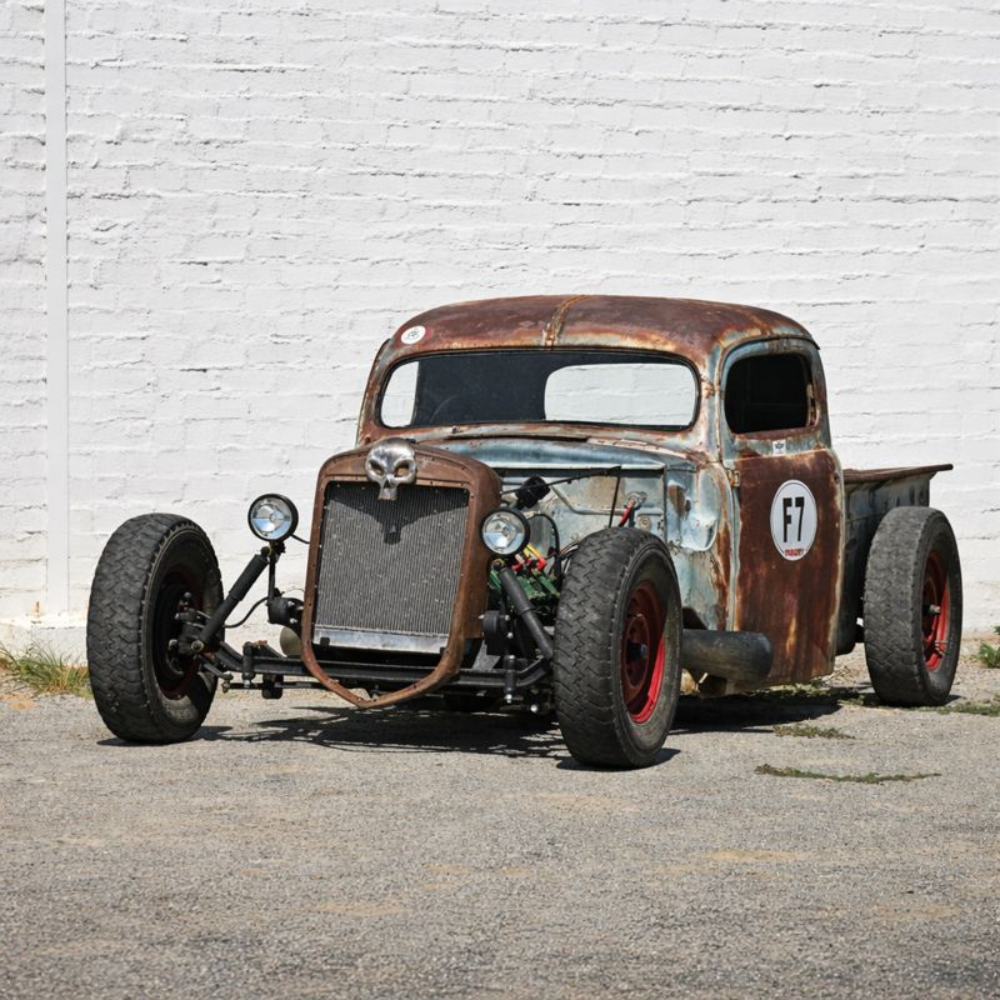
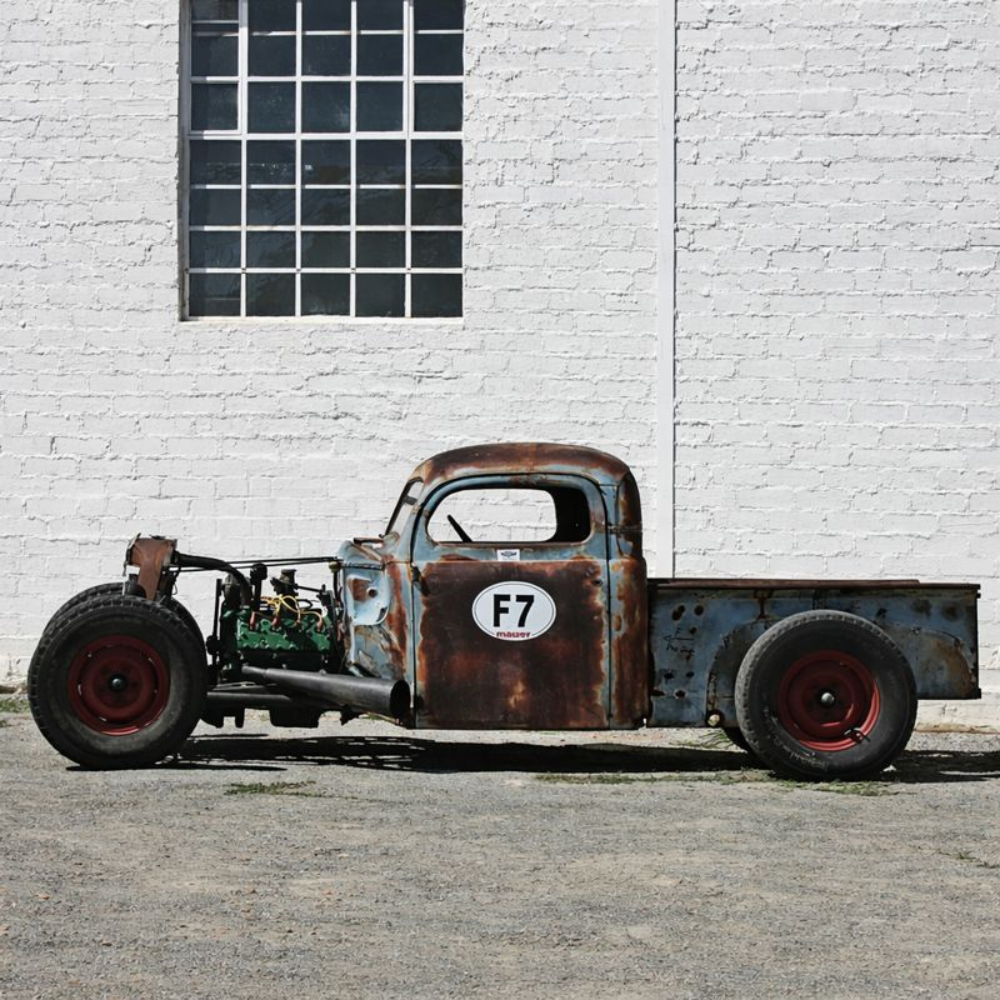
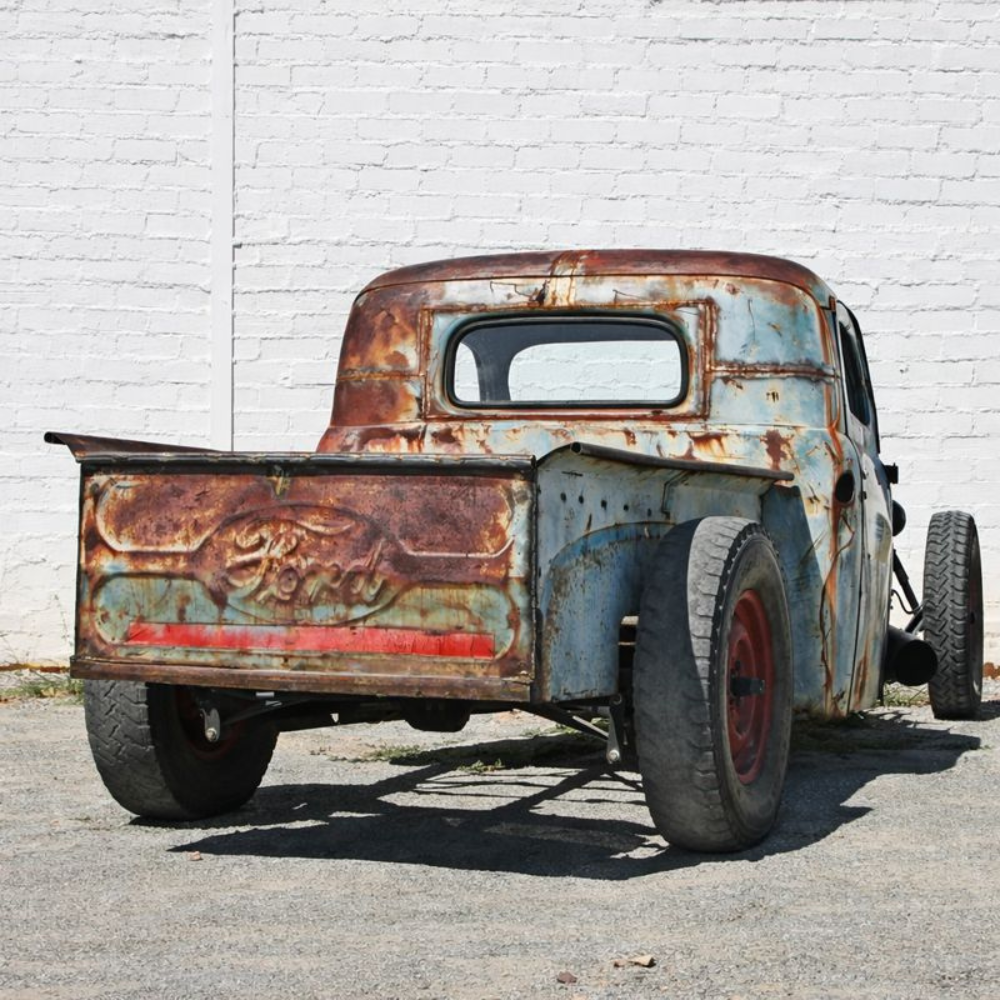
Inspired by a rat rod build seen in print, the decision was made to build something raw, fast, and functional. The team consisted of Wynand Nell, mechanical problem-solver extraordinaire; JC Engelbrecht; Henry Buckley, a master builder of anything mechanical; and a shared belief that deadlines are suggestions, not rules.
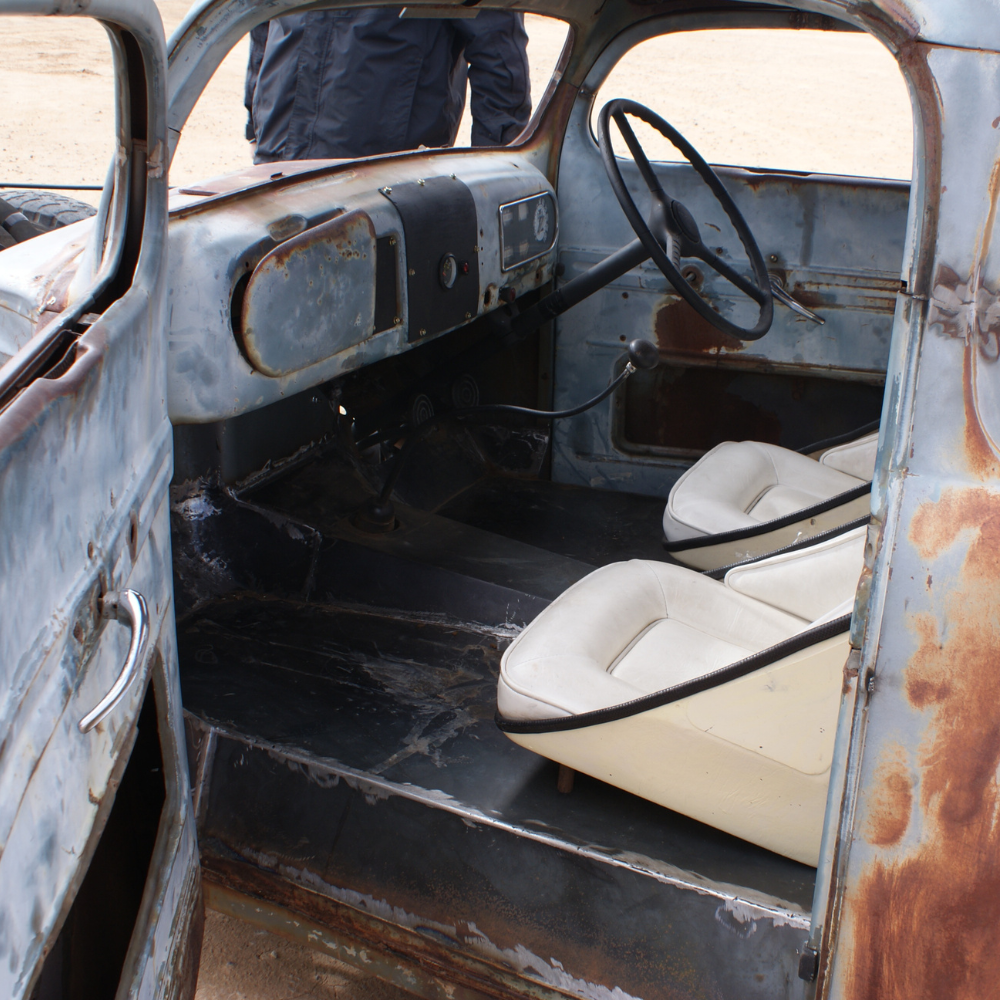
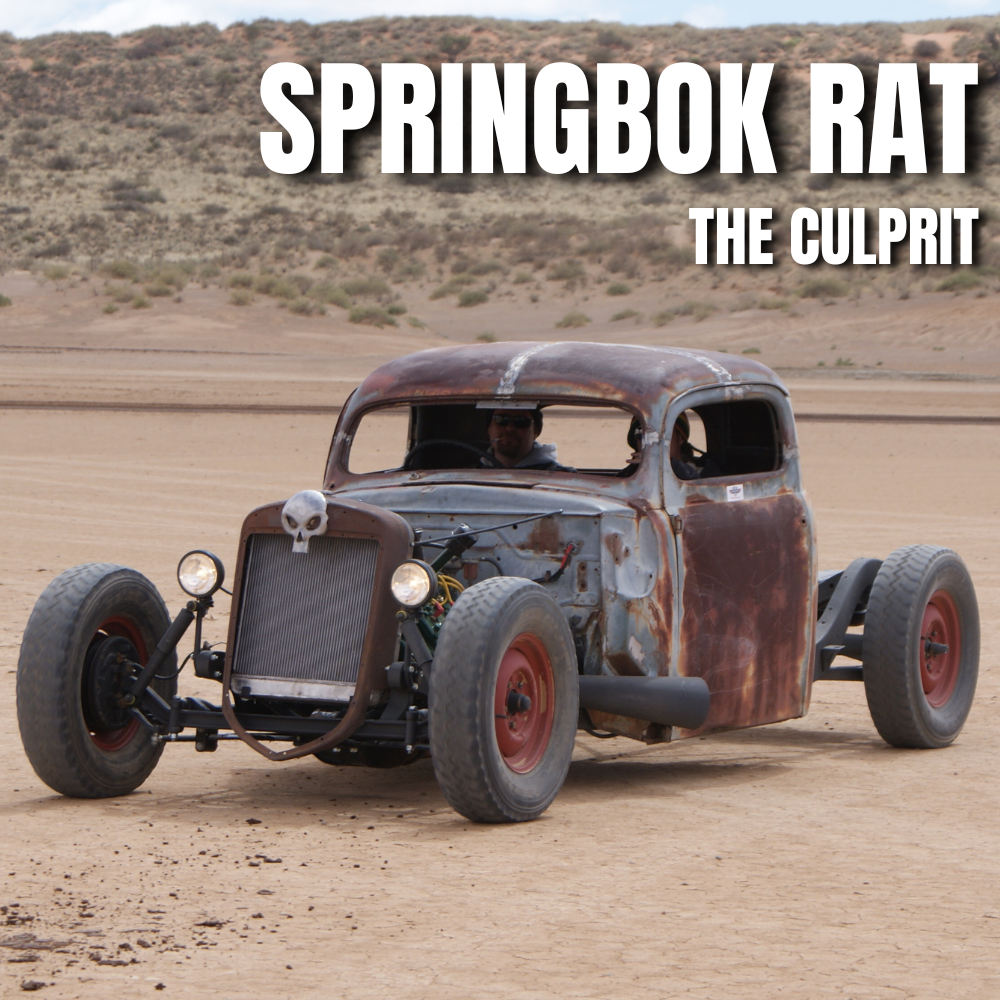
The foundation was already waiting. A 1941 Ford chassis, acquired years earlier in Pofadder in exchange for a bottle of brandy (the town, not the snake), and a 1948 Ford pick-up body rescued during a scavenging trip to Kamieskroon back in 1994. With Henry’s input, the vision became clear: chopped, channelled, stretched — and built to run.
Work began immediately. Every evening from around 5pm until 10pm, weekends included, for seven relentless weeks.
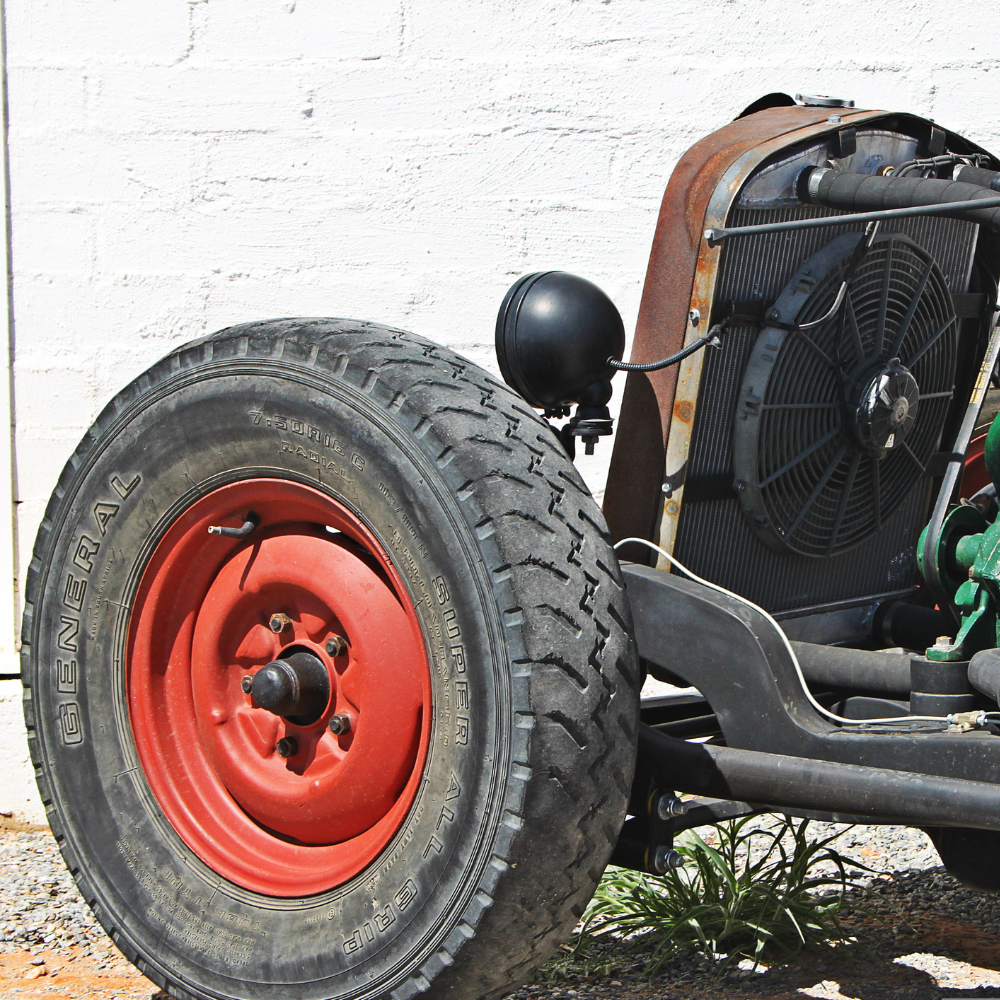
The stock ’41 front frame rails were removed, extended, and boxed. A transverse leaf spring was fabricated from a Mercedes-Benz truck rear spring — a process that consumed three Bosch angle grinders and an impressive number of cutting discs. The front A-frame was cut and relocated to the sides of the chassis, and a ’48 Ford pick-up I-beam axle was fitted.
While Henry tackled the roof chop and channelling, Wynand focused on the mechanicals. Time had not been kind to the gearbox and differential, both of which had collected water over the years. With no time for replacements, they were rebuilt with new bearings and seals and sent back into service with cautious optimism. The steering box, worn and loose, was rebuilt as best as possible and accepted for what it was — imperfect, but usable on the vast open pan.
Motivation was fuelled by coffee, German “fizzy drinks,” and the occasional stronger refreshment as the deadline loomed.
Then came the next setback.
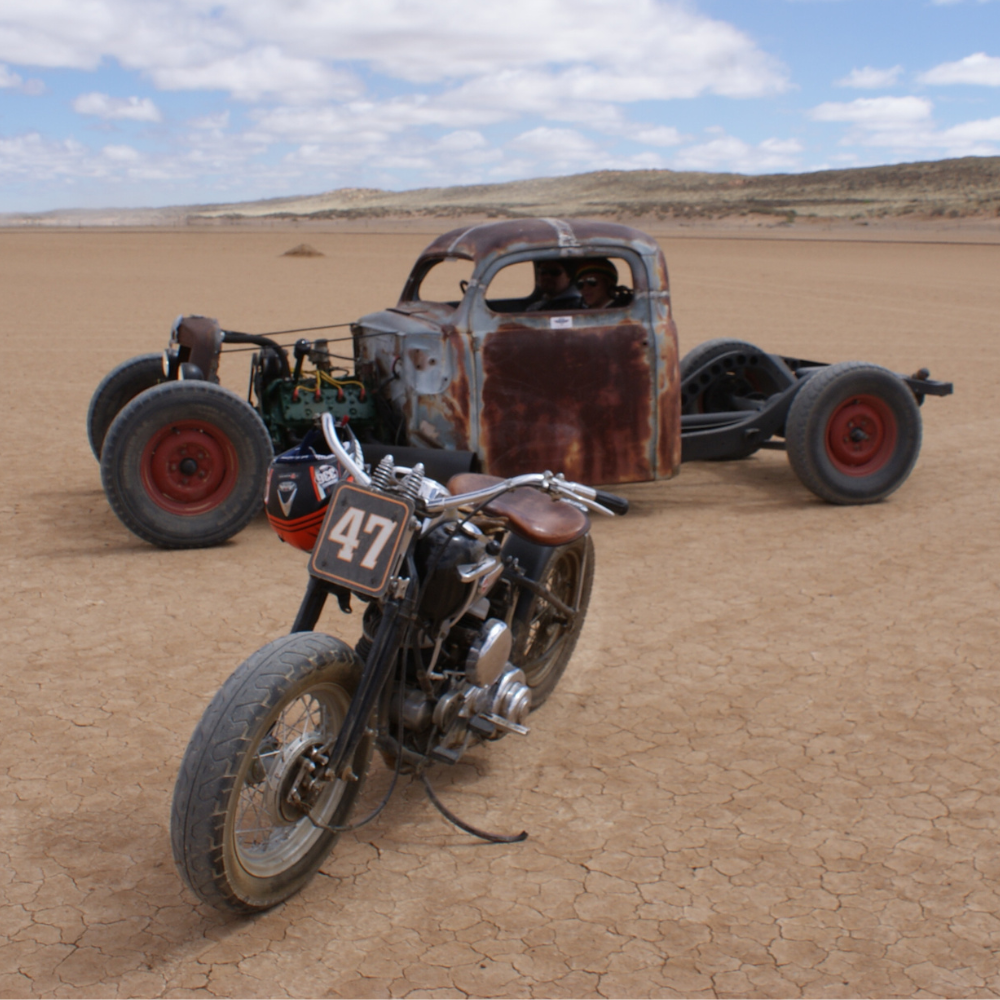
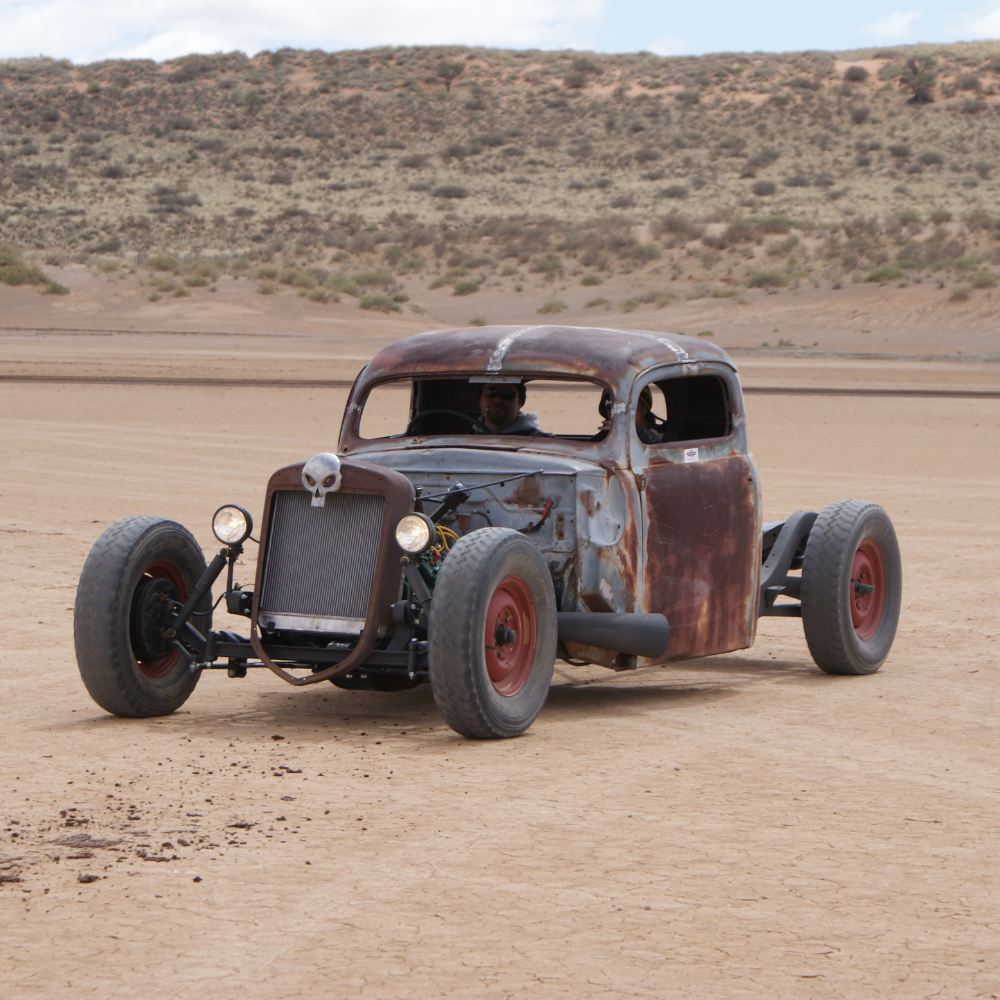
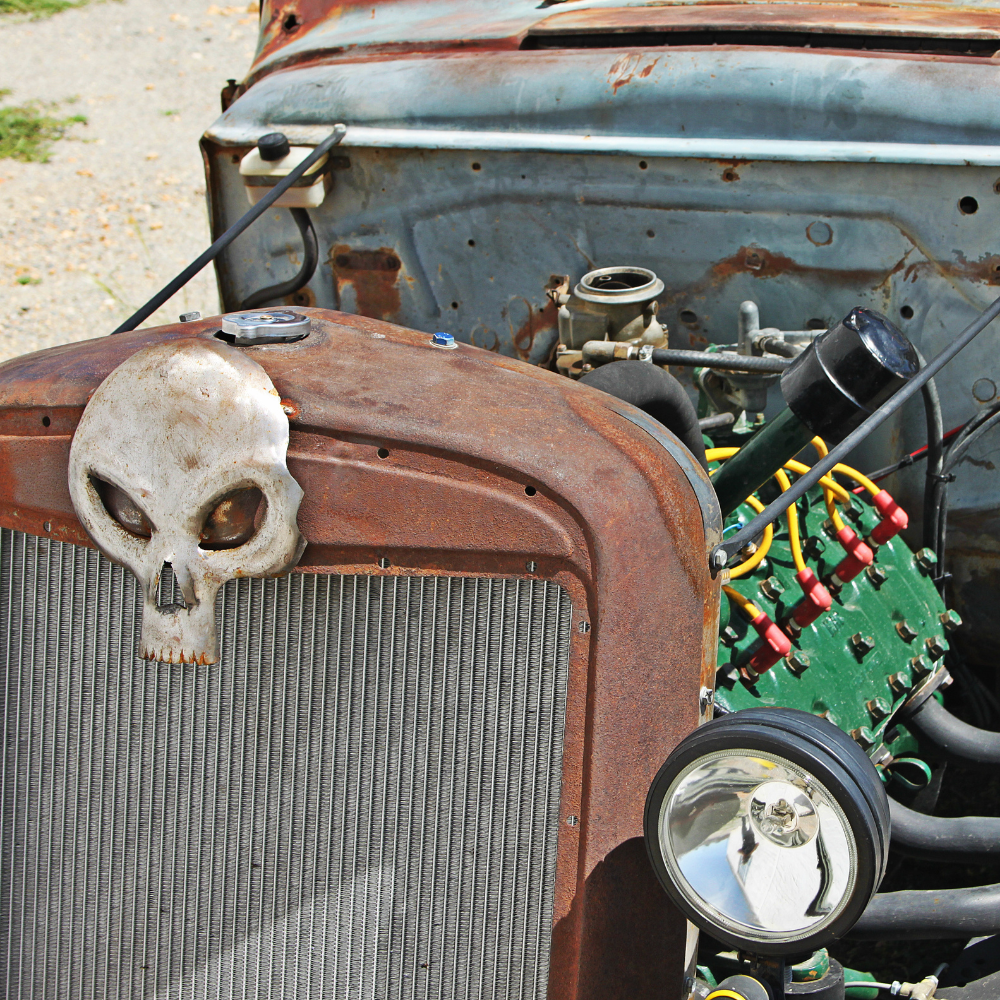
The 1951 flathead V8 sourced from a Marmon-Herrington truck was found rusted solid, rainwater having sat in the cylinders for years. With liberal applications of castor oil and perseverance, the engine slowly freed itself. The head gaskets, however, had not survived. With no replacements available, the decision was made to trust fate and remove the radiator cap seal.
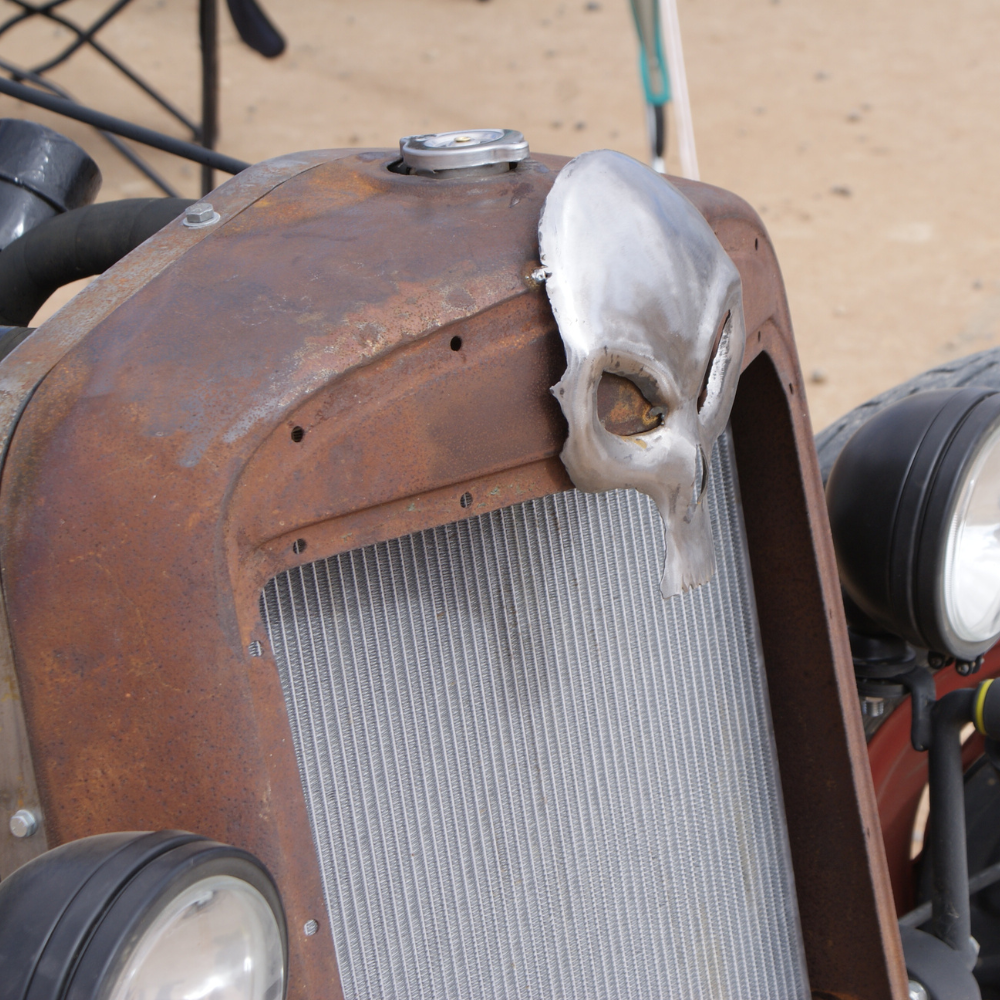
The radiator itself was custom-built using a Land Cruiser core with aluminium tanks. A 1930s International truck cowl was adapted, and what was meant to be an air cleaner ended up as a grille mascot thanks to time constraints. The lake pipes were hand-fabricated by Henry from 1.6mm mild steel — with just two days to spare.
Wiring and seats were fitted the morning of departure.
At 17:00 on 21 September 2012, the team left Springbok in high spirits. That optimism was briefly tested in Aggeneys when a comfort stop revealed a slow puncture and a loose wheel bearing on the borrowed trailer. No proper jack. No spare wheel pressure checked. With help from locals, they got moving again.
Fuel stop in Upington. Then the final leg.
After overshooting the Rietfontein/Namibian border turn-off and doubling back, they arrived at Hakskeenpan at 3am to what looked like a graveyard — everyone asleep. Removing the rod from the trailer, enthusiasm took over. A few test runs were made. The safety officer was unimpressed.
Thus, the car earned its name: The Culprit.
The following day delivered exactly what had been hoped for — camaraderie, chaos, and speed. Fellow rodders were met, along with a certain hot rod magazine editor (some van Zyl guy). The first runs topped out at 127km/h. After replacing the head gaskets, that number climbed to 160km/h.
Plans are already in motion for a more serious flathead build, and the intention is to return with more cars and bikes.
Because if there’s one conclusion to draw from this project, it’s simple: this is how you have the most fun with your clothes on — and without mind-altering substances.