Some cars are bought because they are clean. Some are bought because they are rare. And then there are cars that get bought because the owner looks at what is essentially a shell of a project and thinks, “I can make something out of this.”
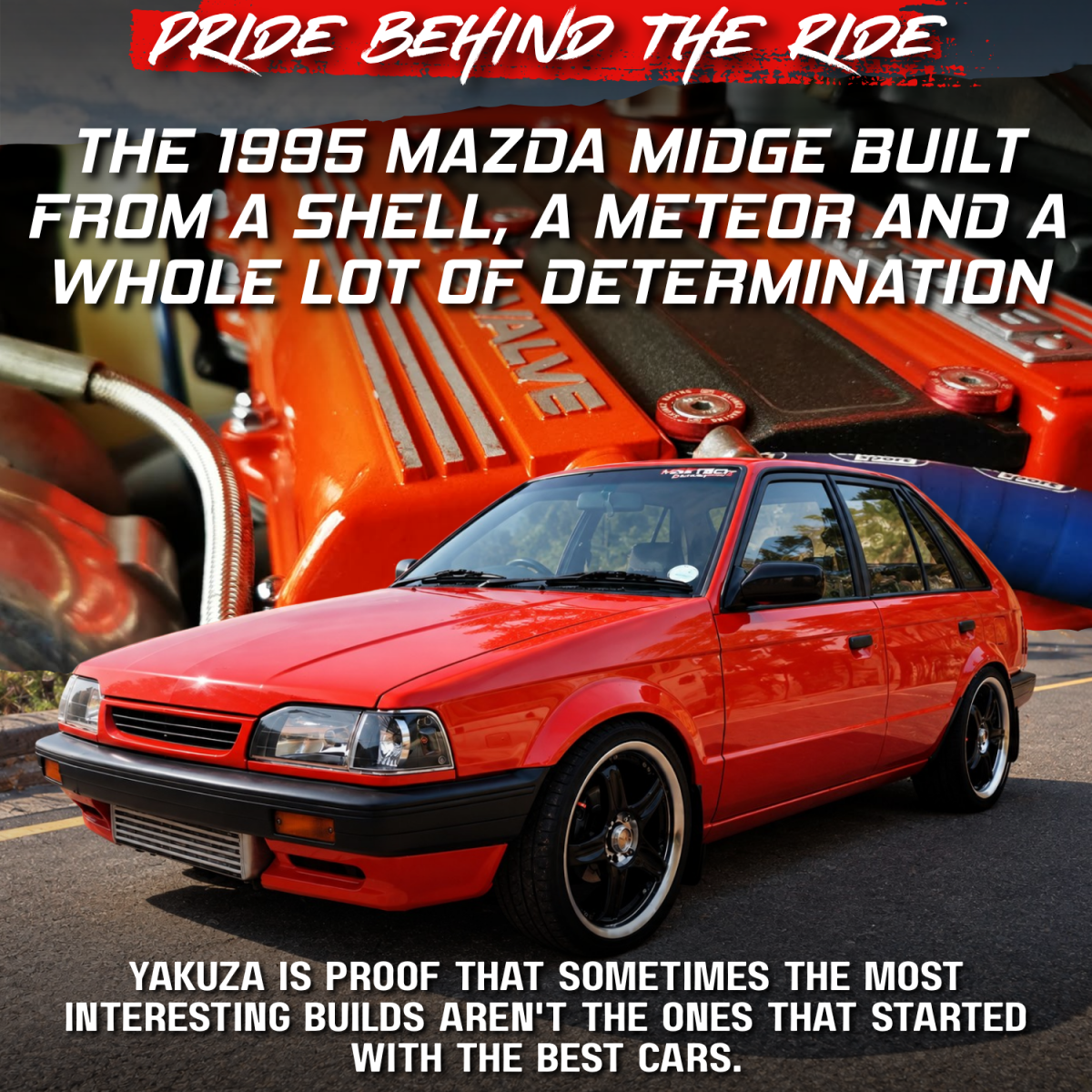
This is Yakuza — a 1995 Mazda Midge with a story that started with an almost empty shell and turned into a long-term passion project built around ingenuity, hard work, rare parts and a healthy amount of horsepower.
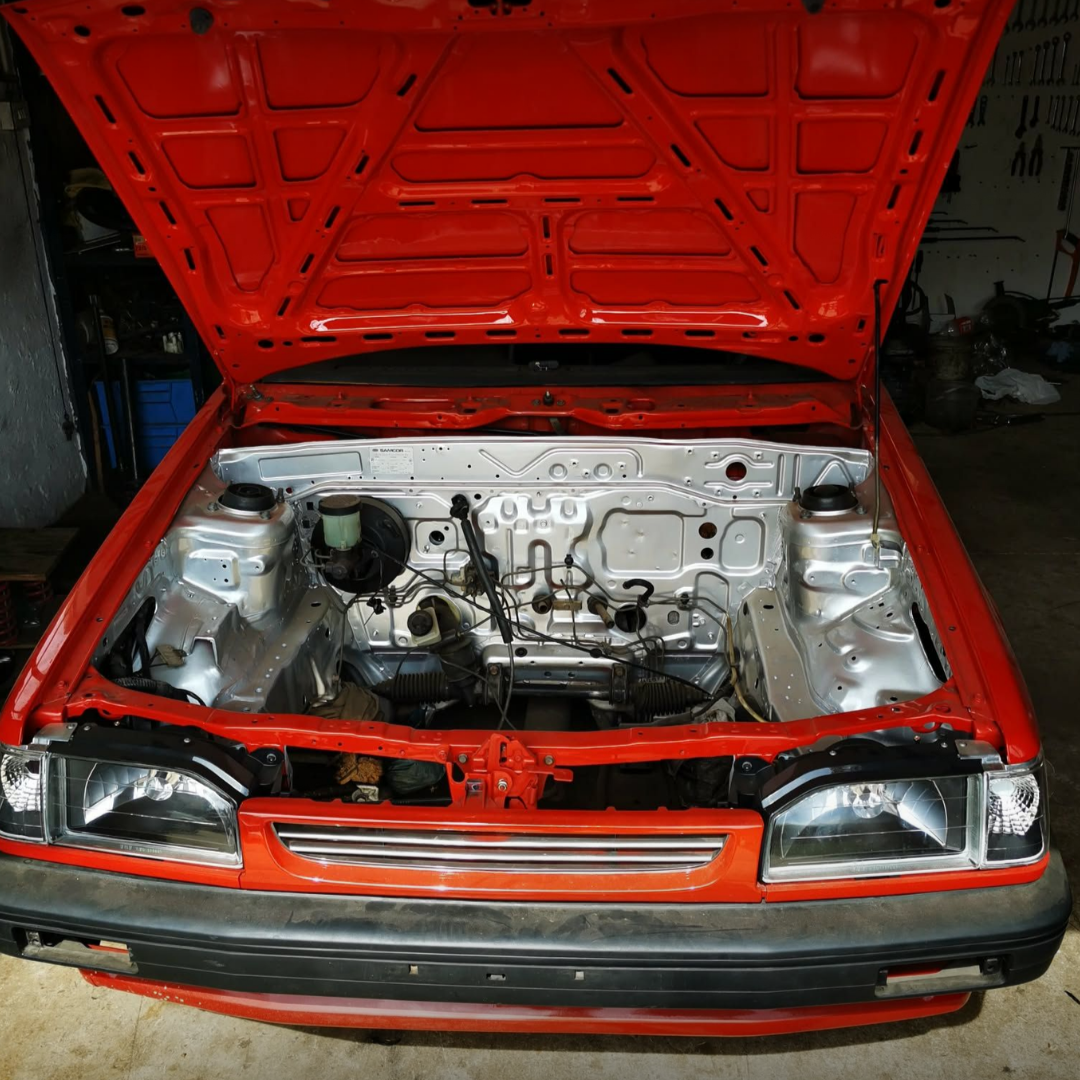
The story officially began on 11 November 2019, when the car was purchased as a shell.
And when we say shell, we mean it.
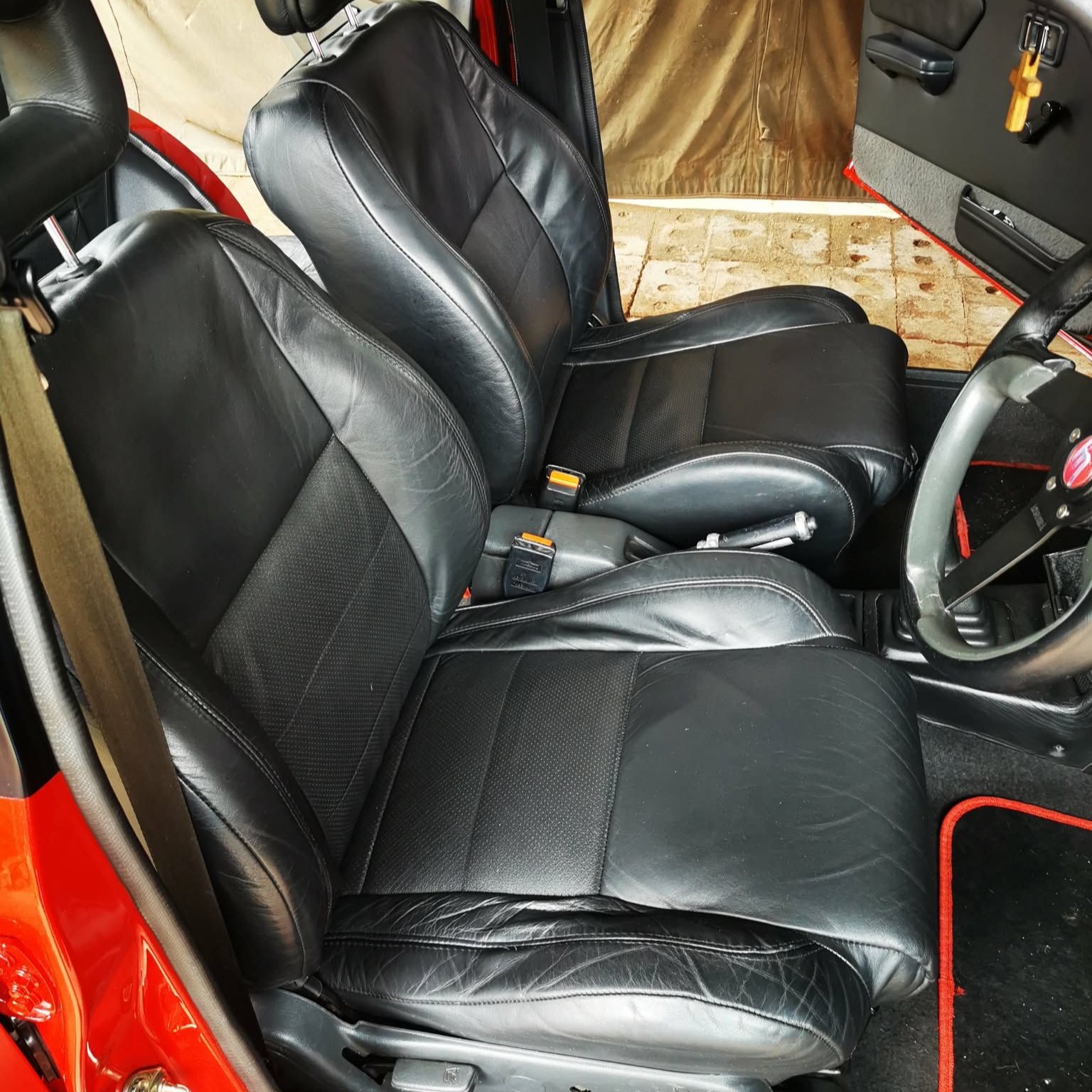
The windows were gone. The seats were gone. The door panels were gone. There was no engine and no drivetrain. What remained was essentially the starting point for a project that would take years of searching, building, modifying and problem-solving.
But the car did come with something valuable: a collection of OEM parts that the previous owner had imported from Japan. Many of those parts were no longer available in South Africa, making them extremely difficult to replace.
The previous owner had started the project but eventually moved to Australia. The car was placed into storage, and somewhere along the way, it appears that a large portion of the remaining parts disappeared.
That could have been the end of the story.
Instead, it was just the beginning.
FROM FORD METEOR TO MAZDA MIDGE
The same day the Mazda arrived, the next project began.
A Ford Meteor GLi 16V was stripped to provide the parts needed to bring Yakuza back to life.
There was a very good reason for this.
The chassis of the original car had effectively been cooked after years of street racing. Rather than trying to resurrect a chassis that had already lived a very hard life, the decision was made to transfer what was needed and start building the Mazda properly.
And the build moved quickly.
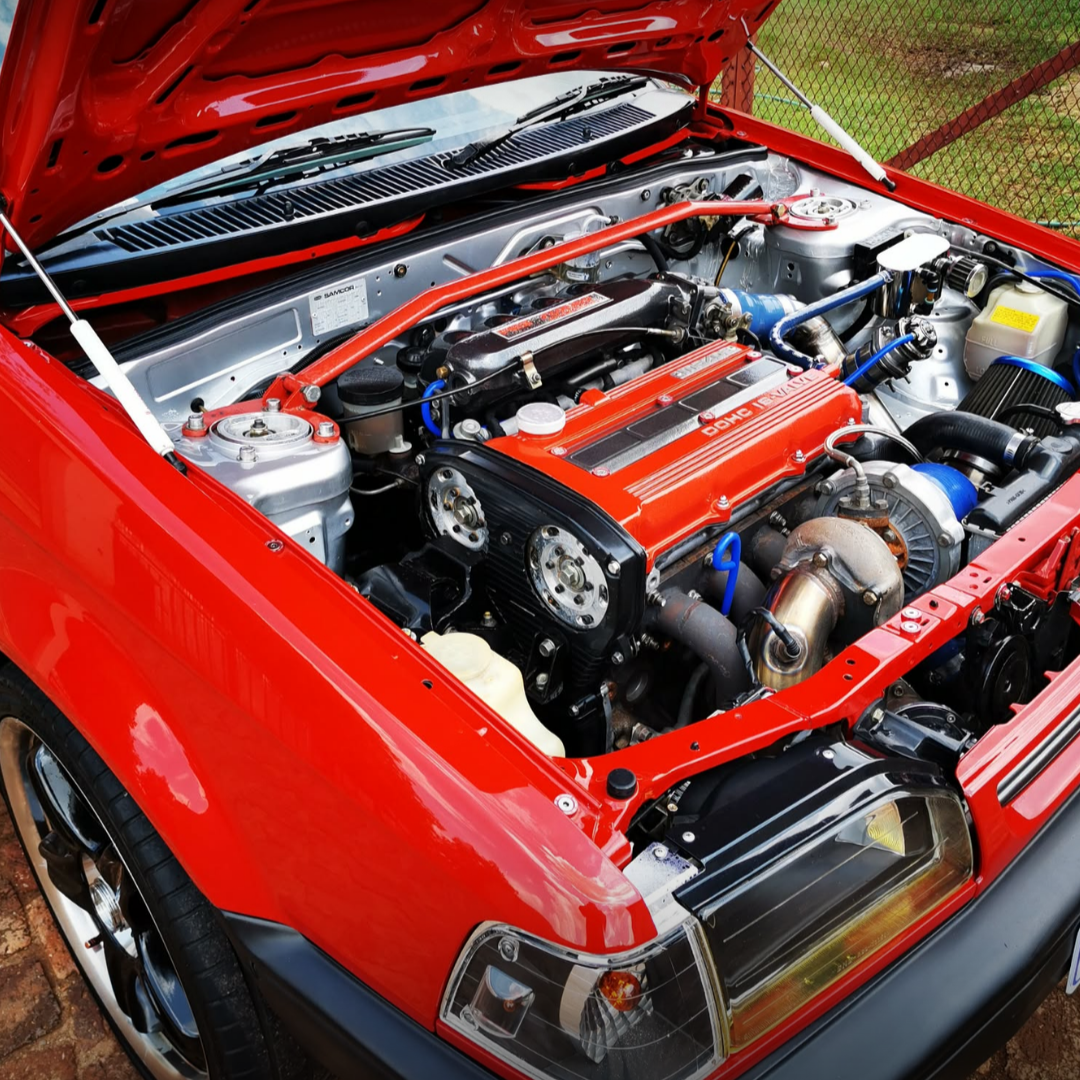
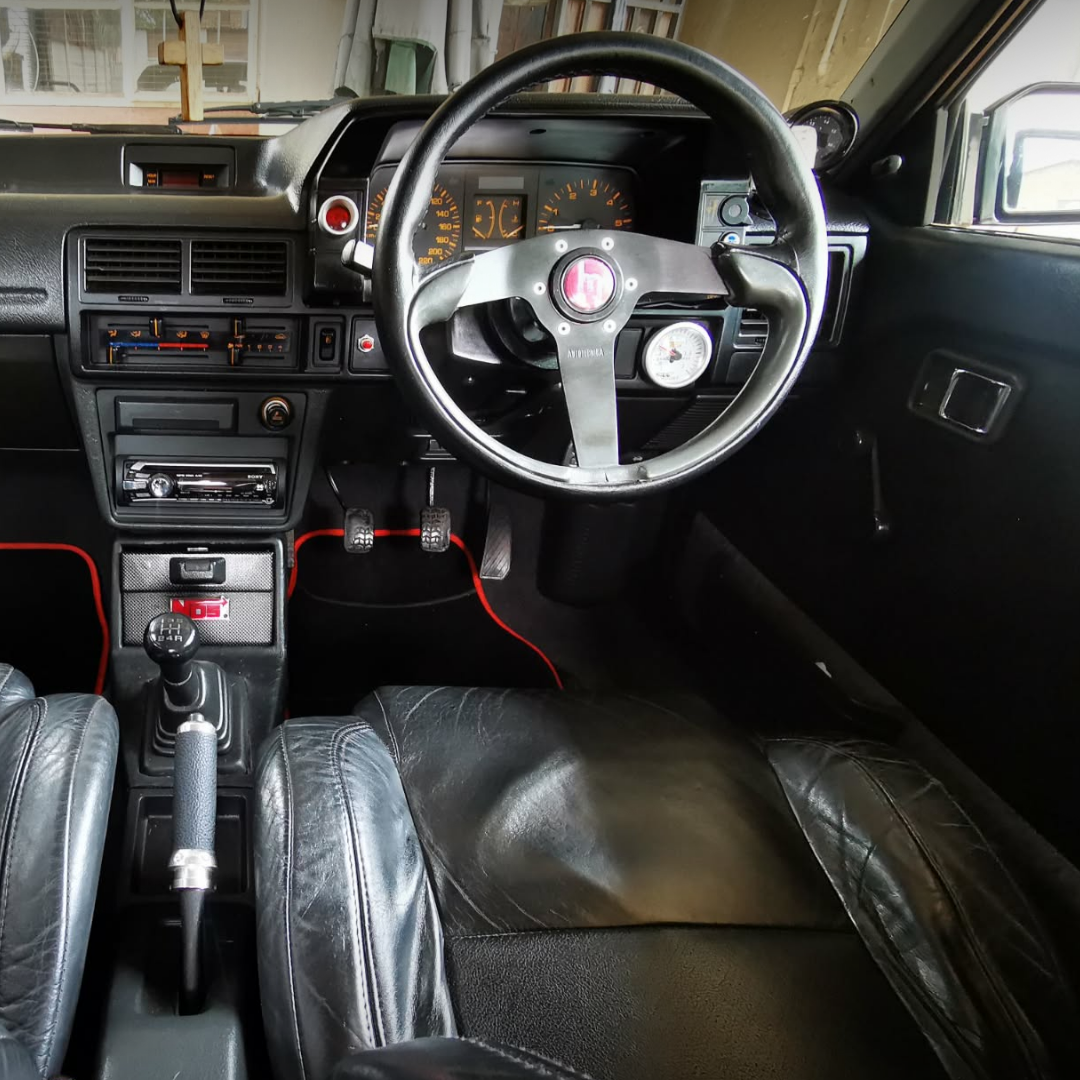
Within roughly a week, the interior was completed, the engine and gearbox were installed, the turbo conversion was fitted, and the fuel tank and fuel lines were taken care of.
What started as an empty shell was beginning to look like a car again.
But getting it running was only one part of the challenge.
Making it complete was another story altogether.
THE SMALL PARTS BECAME THE BIGGEST PROBLEM
Anyone who has restored an older car knows that the big components are often not the hardest things to find.
It is the little stuff that drives you crazy.
Clips.
Brackets.
Trim pieces.
Mounting hardware.
Small OEM components that nobody has bothered manufacturing for years.
Yakuza was no different.
A lot of the small clips and components were no longer available, which meant finding alternatives, making plans and, in some cases, simply figuring out how to make things work.
Then there were the parts that had become almost mythical.
One example was the rear 200i wings.
Finding a good set became a mission in itself, but eventually the right parts were tracked down.
That is one of the defining characteristics of this build. It wasn't simply a matter of throwing aftermarket parts at the car.
There was a constant effort to find the correct pieces and preserve the character of the Mazda while turning it into something much more capable.
CLEANING UP THE OUTSIDE
The attention to detail continued beyond the mechanical side.
The door locks and boot locks were removed, along with the rear wiper hole and the roof antenna.
The result is a much cleaner appearance, with fewer unnecessary details interrupting the shape of the car.
Of course, there is always a price to pay for looking cool.
The remote central locking might be convenient, but when the battery in the remote decides to give up, suddenly those deleted locks become very relevant.
It's one of those compromises that makes perfect sense when you're building a car for yourself.
THE HEART OF YAKUZA
Under the bonnet sits a bone-stock FE3.
At least internally.
The engine was left stock, with the main change being the addition of a turbocharger and a set of 550cc Ford Cosworth injectors.
It is a combination that proved to be remarkably durable.
For the engine management, the car originally ran a Spitronics Advance system. That changed when one of the owner's good friends donated a brand-new Sustech system.
That presented another opportunity to take the car a step further.
The old management system was removed and the Sustech system was installed, setting the stage for another chapter in the Yakuza story.
Once everything was in place, it was time to see what the combination could actually produce.
224KW FROM A STOCK FE3
The car was taken to the dyno where Graham Susman, the Sustech master, worked his magic on the new management system.
The result?
224kW at 1.1 bar of boost.
And that figure was achieved on 95-octane fuel with NF octane booster.
For an FE3 that was still running stock internals, it was a serious result.
But perhaps more impressive than the dyno number was the reliability that followed.
The engine continued running turbocharged for approximately 16 years without any major issues.
Sixteen years.
That says a lot about the combination and the way the car was being run.
THEN CAME THE EXPENSIVE LESSON
Eventually, however, even a long-running combination can reach its limit.
The problem wasn't simply the boost.
It wasn't the turbo.
It wasn't the management.
It was a mistake with the NF octane booster mix.
The wrong mixture was used, and the engine paid the price.
The result was broken ring lands on three pistons.
After 16 years of turbocharged service, the FE3 finally suffered a serious internal failure.
It could have been the end of the setup.
Instead, it became another opportunity to evolve the build.
THE 2JZ CONNECTION
For the rebuild, a set of 2JZ-GTE non-turbo pistons was sourced.
The reason for the choice was simple: their compression ratio is lower than the original FE3 pistons, making them more suitable for the turbocharged application.
The head, meanwhile, remains essentially stock.
There is no massive list of exotic cylinder-head modifications hiding underneath the rocker cover.
Instead, the build uses a set of STK inner valve springs and intake cotters on all the valves.
It is another example of the overall philosophy behind Yakuza.
The car isn't built simply to have an impressive parts list.
It is built around a combination of parts that work together, with changes made where they are actually needed.
MORE THAN A CAR
What makes Yakuza interesting isn't just the 224kW dyno figure.
It isn't just the turbo FE3.
It isn't even the fact that the car started life in 2019 as a shell missing most of the components needed to make it a car.
It is the story behind every part.
The Japanese OEM parts that had to be hunted down.
The missing clips that required a workaround.
The rare rear 200i wings.
The Ford Meteor that donated its components.
The countless hours spent putting everything together.
The decision to clean up the exterior by removing the locks, rear wiper hole and roof antenna.
The Spitronics system that eventually made way for Sustech.
The dyno session that produced 224kW.
The 16 years of turbocharged reliability.
And then, after all that time, one mistake with the octane booster that resulted in three broken ring lands.
That is what makes a project car special.
A finished car is easy to look at.
A car with a history is something completely different.
BUILT, BROKEN AND BUILT AGAIN
Yakuza is a perfect example of why some cars become more than machines.
It has evolved over years rather than being assembled overnight.
Every problem created another solution. Every hard-to-find part added another chapter. Every modification changed the character of the car a little more.
And perhaps most importantly, the car survived.
It survived being abandoned as a project.
It survived years of storage.
It survived being rebuilt from a shell.
It survived 16 years of turbocharged abuse.
It survived a catastrophic piston failure.
And it kept coming back.
The result is a 1995 Mazda Midge that carries far more history than its age suggests.
From an almost empty shell purchased on 11 November 2019, to a turbocharged FE3-powered street car making 224kW at 1.1 bar, Yakuza is proof that sometimes the most interesting builds aren't the ones that started with the best cars.
They're the ones where the owner simply refused to give up.
This isn't just a Mazda Midge.
This is Yakuza.