Why Valve Springs Matter More Than You Think
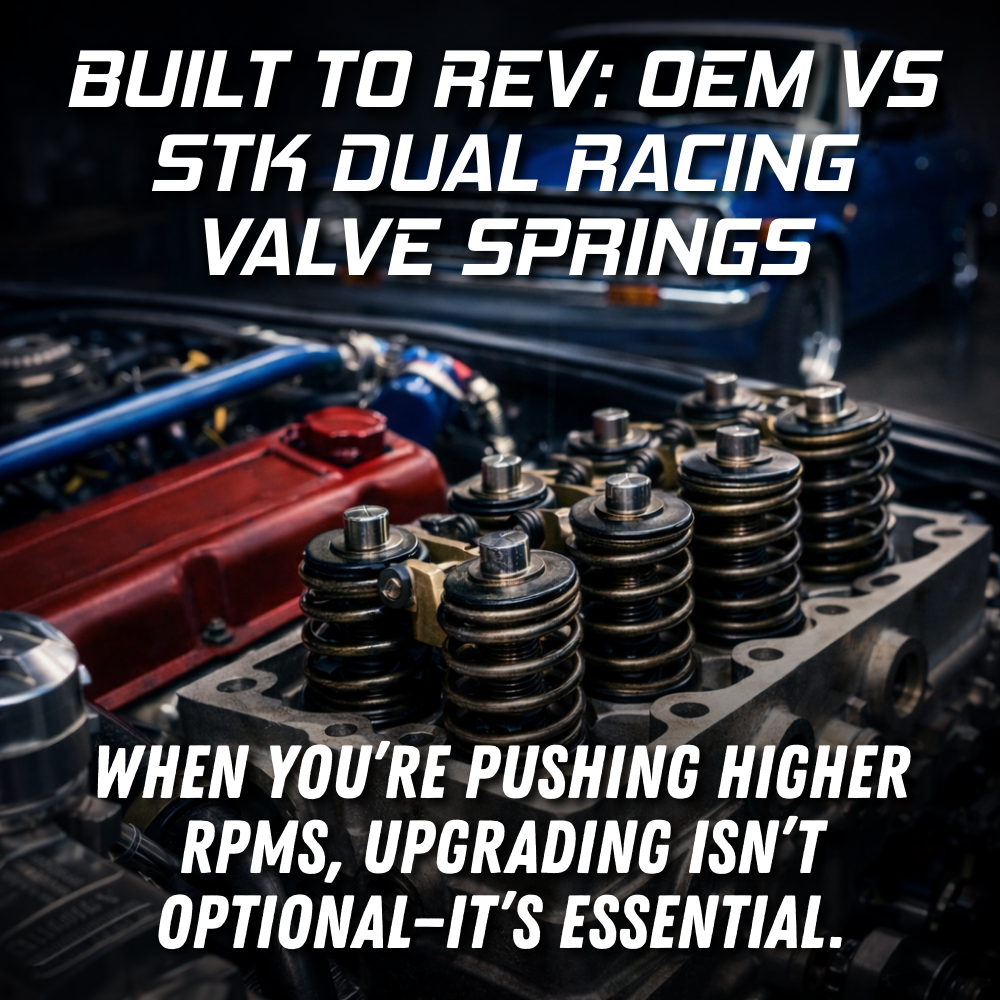
Valve springs play a critical role in engine reliability and performance. Their job is simple but vital: keep the valves firmly seated and under control as engine speed increases. When valve control is lost, power drops—and serious engine damage can follow.
For standard daily driving, factory (OEM) valve springs do their job well. But once you introduce higher RPMs, aggressive camshafts, or forced induction, OEM springs quickly become a weak point.
The Limits of OEM Valve Springs
OEM valve springs are engineered for comfort, efficiency, and longevity at factory RPM ranges. They are not designed for performance driving or racing conditions.
Common issues with OEM springs in modified A14 and A15 engines include:
-
Valve float at higher RPM
-
Inconsistent valve timing
-
Reduced power in the upper rev range
-
Increased risk of valve-to-piston contact
-
Premature valvetrain wear
As engine speed rises, OEM springs simply don’t have enough seat pressure to keep the valves under control.
What Makes STK Dual Racing Valve Springs Different
STK Dual Racing Valve Springs are built specifically for performance-focused Nissan A-series engines. The dual-spring design provides increased seat pressure and improved stability, even under extreme operating conditions.
Key advantages include:
-
Superior valve control at high RPM
-
Reduced valve float
-
Improved camshaft performance
-
Increased reliability under boost or aggressive cams
-
Consistent performance across the rev range
The inner and outer spring combination works together to maintain precise valve movement, ensuring your engine can safely rev harder and breathe better.
Designed for Performance Builds
Whether you’re running a fast street setup, track car, or boosted application, STK Dual Racing Valve Springs are engineered to handle the demands that OEM parts cannot.
They are ideal for:
-
Performance camshafts
-
Raised rev limits
-
High-compression builds
-
Turbo or supercharged setups
-
Track and motorsport use
Instead of waiting for valve float or mechanical failure, upgrading your valve springs early protects your engine and unlocks its full potential.
OEM vs STK – The Real Difference
|
Intended Use |
Daily driving |
Performance & racing |
|
High RPM Stability |
Limited |
Excellent |
|
Valve Float Resistance |
Low |
High |
|
Camshaft Compatibility |
Stock only |
Performance cams |
|
Boost Compatibility |
Not recommended |
Designed for boost |
Final Verdict
If your Nissan A14 or A15 engine is anything more than stock, OEM valve springs are holding you back. STK Dual Racing Valve Springs deliver the control, strength, and reliability needed for serious performance builds.
When you’re pushing higher RPMs, upgrading isn’t optional—it’s essential.