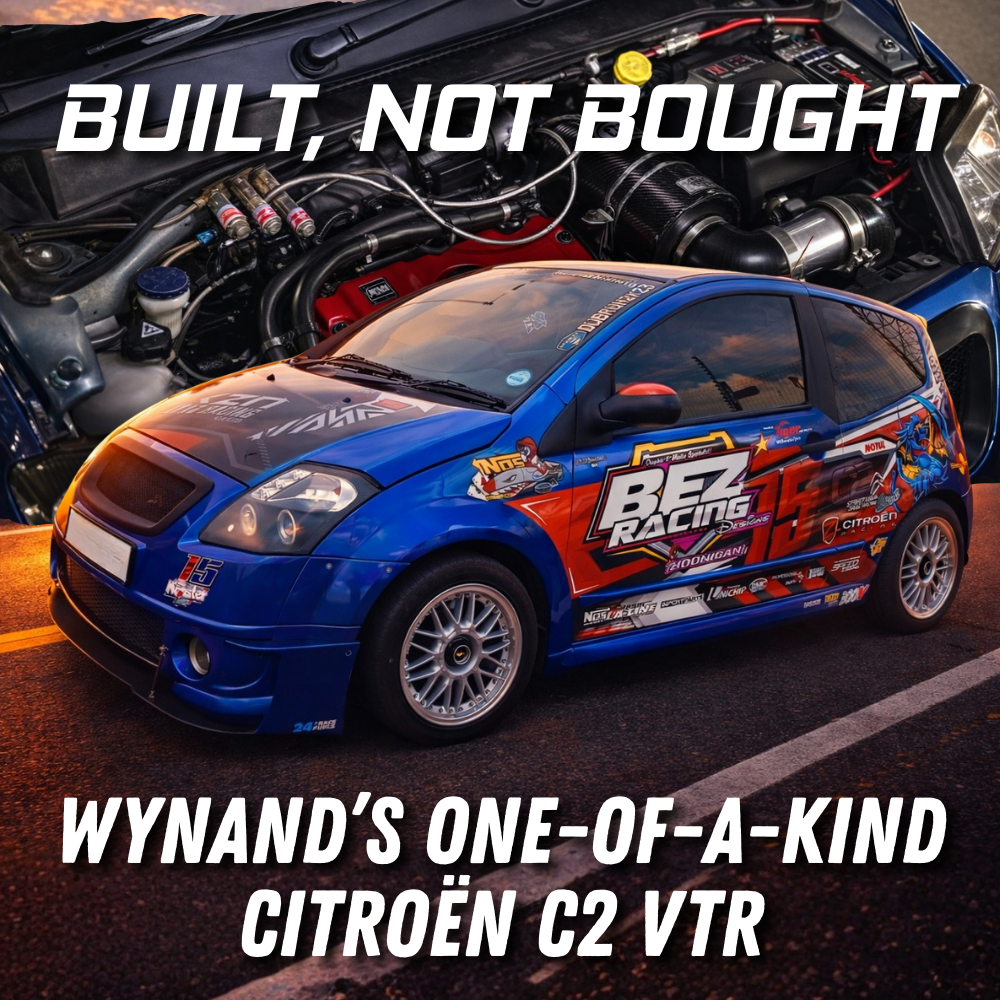
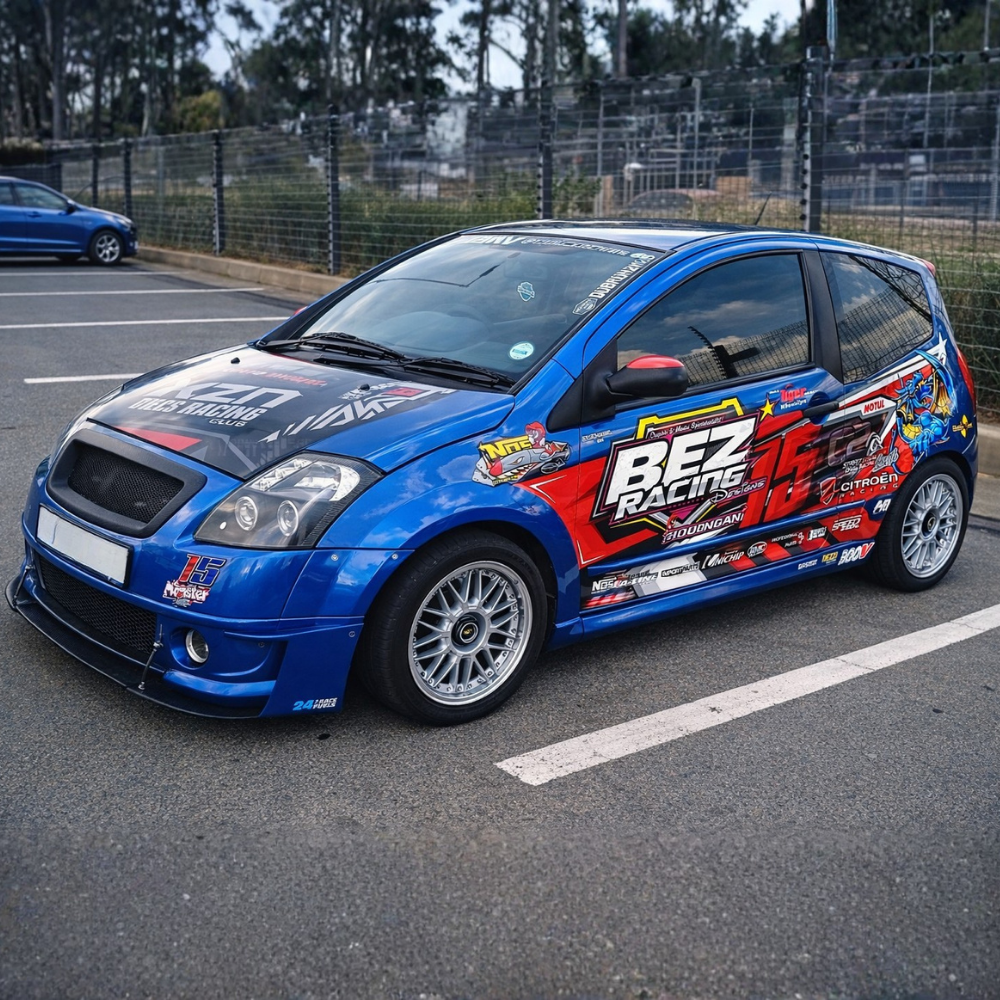
I’m Wynand, and this is my 2006 Citroën C2 VTR—a car that is anything but typical. In fact, it may very well be the only one of its kind in South Africa. What started as a modest French hot hatch has, over more than 14 years, evolved into a deeply personal, continually developing project that reflects vision, persistence, and a passion for doing things differently.
From Demo Car to Dream Build
The C2 was originally purchased as a demo model in 2008. Before this, my automotive journey included a modified Honda Ballade that served as a show car. When the Citroën entered my life, the intention was simple: keep it stock. But if you have motorsport DNA in your blood, you know that “stock” rarely stays that way for long.
This build didn’t happen overnight. It’s a labour of love, still ongoing today. People often ask why I chose a Citroën instead of a more obvious platform like a VW. The answer is simple: I wanted to be different. This C2 proves that with enough determination, you can build something truly special—no matter how unconventional the starting point.
The Starting Point
The C2 VTR began life with a 1.4L single overhead cam engine, producing a modest 52 kW and 118 Nm. At the time, it was marketed as a “sporty” hatch—essentially the smaller sibling to the 1.6L twin-cam VTS. While the car was still sold locally, aftermarket support in South Africa was almost non-existent, meaning most parts had to be sourced from the UK and Europe, where the C2 enjoyed a much larger following.
Design by Necessity: CAD (Cardboard Aided Design)
With limited off-the-shelf options, nearly every custom part on this car was designed, fabricated, and installed by myself—using good old-fashioned CAD: Cardboard Aided Design. From aero components to interior solutions, this build demanded creativity and hands-on problem-solving, with only a few exceptions for engine work and tuning.
Wheels, Stance, and Suspension
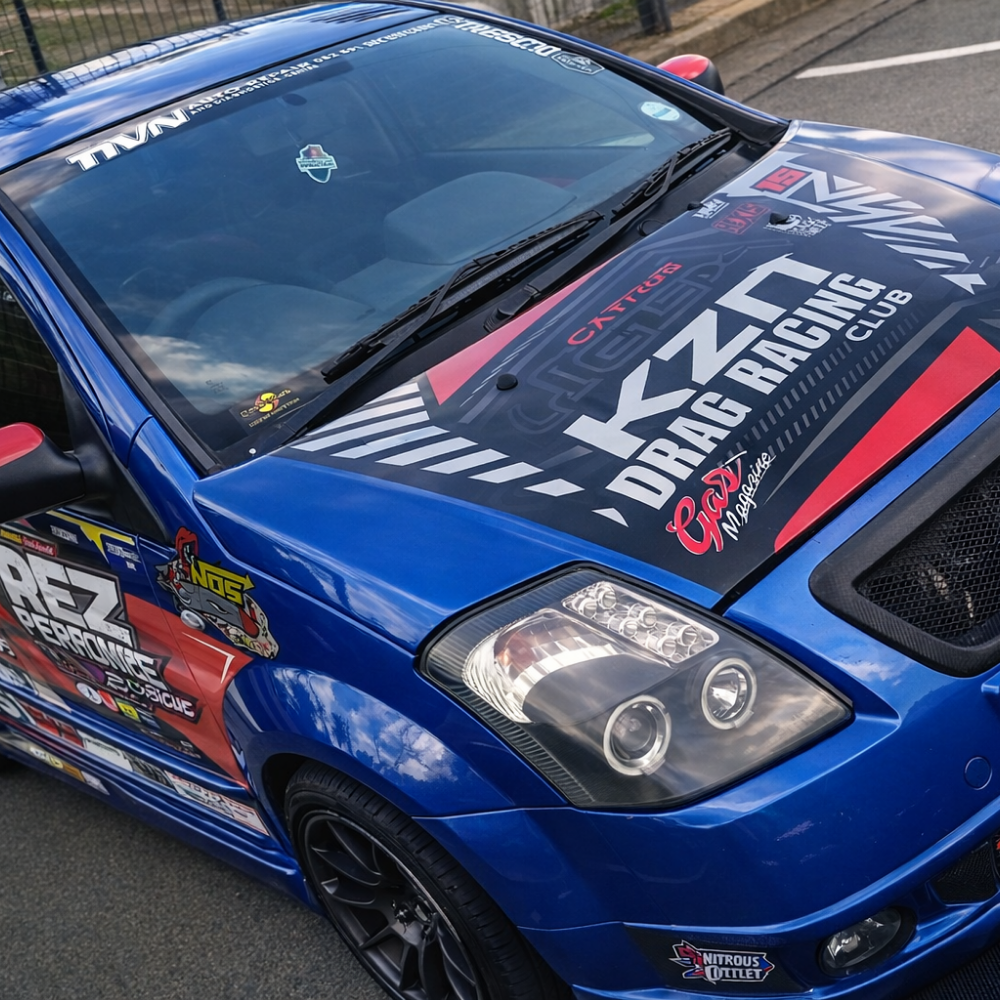
The first major change came after the original wheels were damaged by a pothole. A set of A-line sport wheels with wider, lower-profile tyres was fitted. Due to the uncommon PCD offset, the car was converted to PCD 100, opening up more wheel options. To solve inner-arch rubbing and improve handling, 30 mm wheel spacers were added all round—widening the track and noticeably improving cornering.
In 2024, the setup evolved again after I won a set of 15” Vogue Racing Hart Concept wheels, which remain paired with spacers after further clearance challenges.
Suspension-wise, imported coilovers initially lowered the car by 30 mm before being replaced with FK coilovers supplied by Wheels and More in Johannesburg.
Exterior: Function Meets Personal Style
A rare set of angle-eye headlights—believed to be the only set in South Africa—was sourced locally. Future plans include a fully custom projector setup.
The exterior wrap was designed by Bez Racing Designs (my own brand) and has since gone through two iterations. Red accents were added to the mirror caps and roof spoiler to complement the wrap, with a more aggressive, race-inspired spoiler currently in the planning phase.
The grille was replaced with an imported unit, first painted matte black and later wrapped in carbon-look vinyl.

Hand-Built Aero
Rather than importing expensive body kits, I designed and built my own front splitter after seeing inspiration from a Norwegian C2. Using cardboard templates, the design evolved over months before being constructed from fiberglass with a balsa wood core, laminated in multiple layers. Adjustable support rods were added for strength.
The splitter has been repainted, rewrapped, and refined over time, with future plans to finish it fully in carbon-look vinyl. Matching side extensions were added later using the same process.
During the COVID era, a custom rear diffuser followed—again fiberglass and balsa-based, built from a custom mould. While largely aesthetic, it completes the car’s aggressive look.
Interior: Technology, Creativity, and Control
Inside, the transformation is just as extensive. The factory radio was replaced early on, resulting in the loss of steering wheel controls. After failed commercial solutions, a custom controller using an Arduino Nano was built, with programming help from my son, Henk. We successfully retained all original stalk functions, including the scroll wheel.
To monitor the engine, a custom centre console was fabricated using a modified Ford Raptor screen housing. This first housed an Android tablet, then a Raspberry Pi running custom software, and later evolved into a full Android head unit setup for better visibility and usability.
Custom oil and fuel pressure gauges were added after fitting a nitrous system. These evolved from analogue units to fully custom Arduino- and ESP32-powered digital gauges, displayed on colour LCD screens in 3D-printed housings I designed myself and had printed by my brother in the USA.
Seating, Safety, and Sound
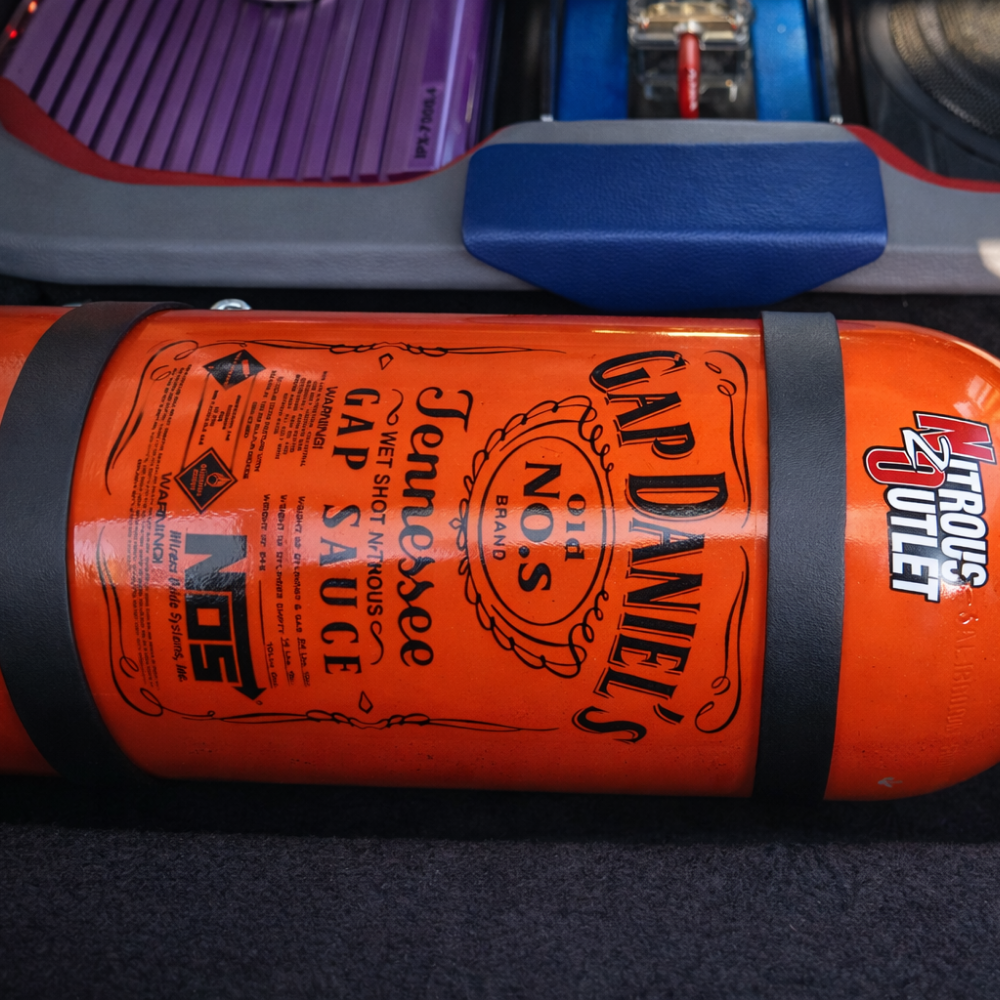
The original seats were replaced with racing seats and harnesses for street-legal drag racing, mounted on custom-fabricated rails. A bespoke harness bar was built to anchor both the harness and nitrous bottle, later redesigned when the sound system was reconfigured.
A full rear seat delete allowed for a custom enclosure housing the nitrous bottle, amplifier, and active subwoofer—while still retaining a functional false floor for daily usability. The audio system balances enjoyment over competition, driven by a Sony DSX-B700 double-DIN head unit, custom wiring, distribution blocks, and a neatly integrated control layout.
A plexiglass control panel in the centre console houses the nitrous controls, while a Unichip map selector on the dashboard allows switching between economy, race, and nitrous maps.
Engine: The Little Monster
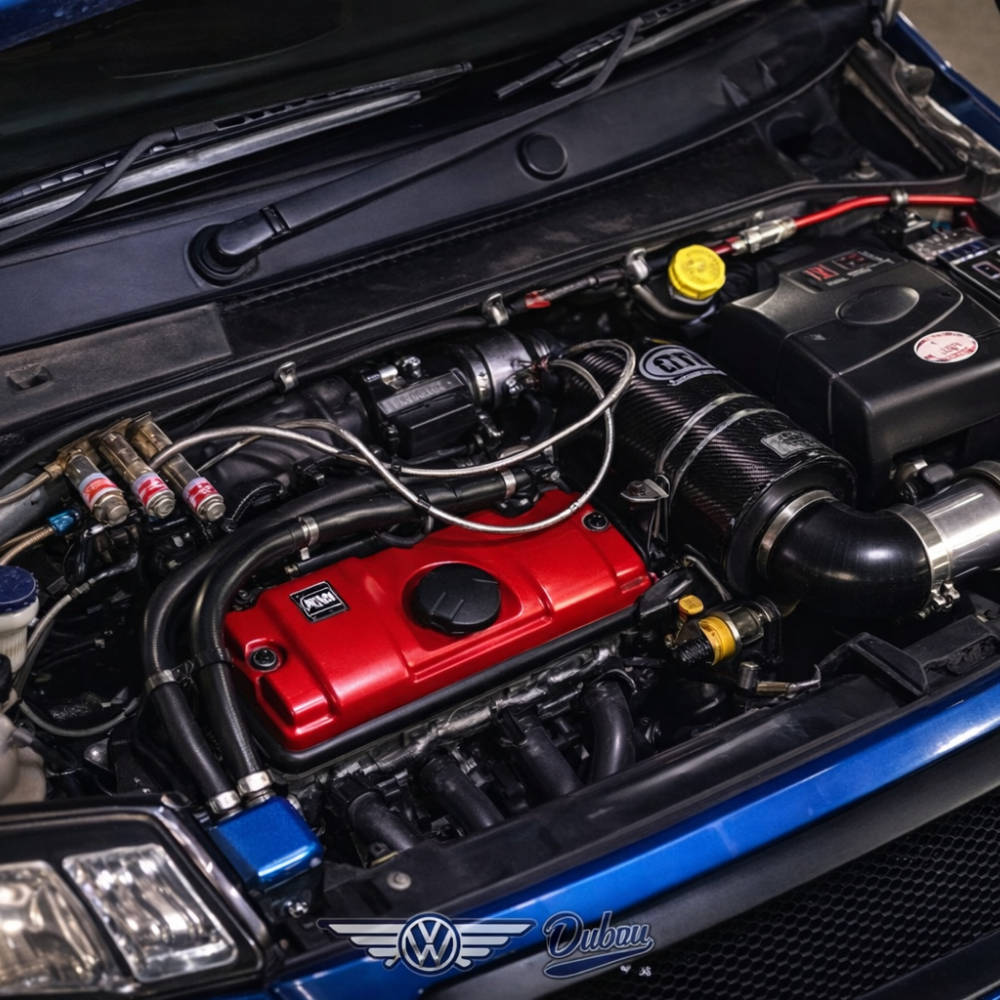
The bottom end of the engine remains stock, but the cylinder head was gas-flowed, ported, and fitted with larger valves, along with a mild street cam. A BMC cold air intake, drawing air from the bumper, reduced intake temperatures by nearly 10°C. The throttle body was also flowed to improve breathing.
A 50 bhp wet nitrous kit transformed the car—but not without drama. A dyno mishap caused a severe backfire, damaging the intake and leading to oil consumption. The engine was later rebuilt by HVN Auto Repair & Diagnostics in Pretoria.
With nitrous and Unichip management, power increased from 52 kW / 118 Nm to a healthy 77.2 kW / 175 Nm, while maintaining excellent fuel economy when driven sensibly—up to 22 km/l on the open road.
Quarter-mile times dropped from 22.6 seconds stock to 19.38 seconds, and finally to an impressive 16.9 seconds with nitrous.

Built With Passion
The C2 has earned multiple Show & Shine awards, but the project is far from finished. It stands as proof of what’s possible with vision, determination, and hands-on craftsmanship. This is not a catalogue build. This is a car shaped by trial, error, and perseverance.
Most of the work was done by myself, with invaluable help from friends and family along the way. The result is something truly unique—a car that embodies the idea that if you can dream it, design it, and build it yourself, anything is possible.
This is the Little Monster. Built, not bought.