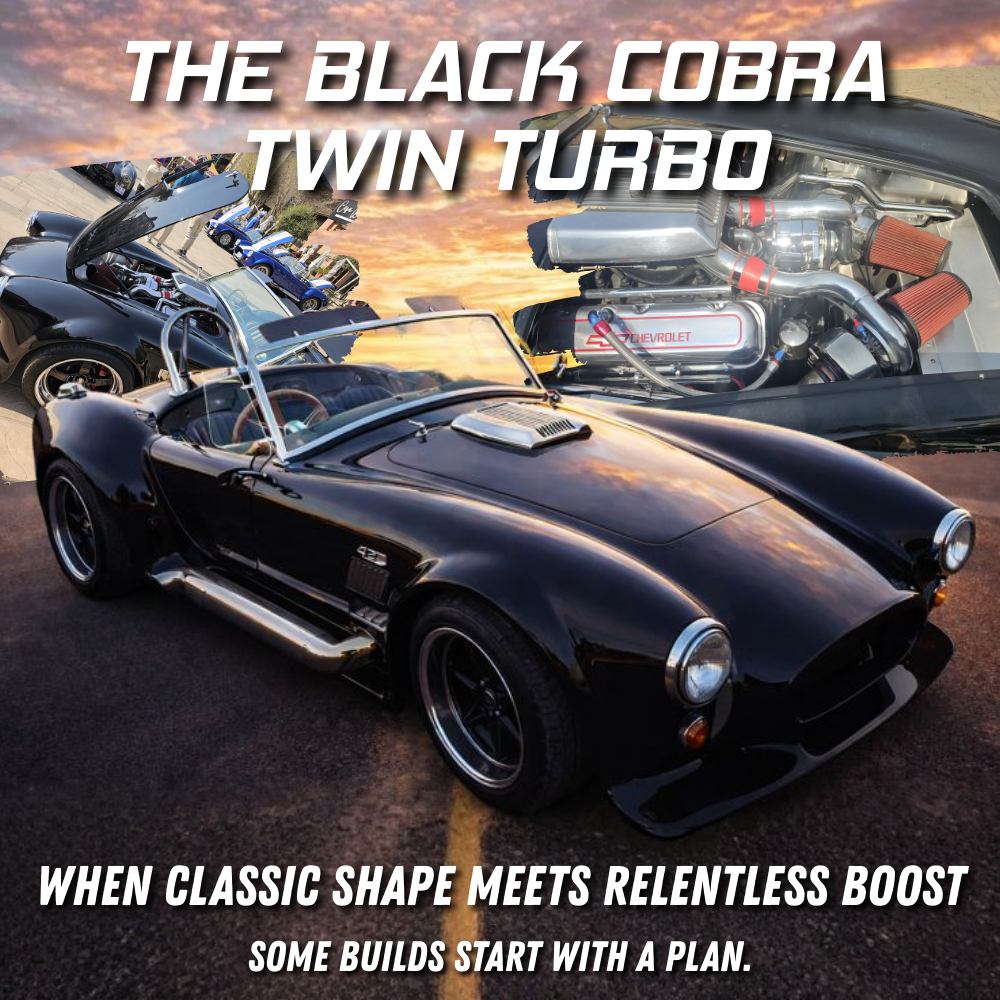
Some builds start with a plan. This one started with a vision — and a refusal to build “just another Cobra.”
It began with a Kit Car Center Venom RT kit — the larger tub version of the well-known Cobra replica. The car looked fantastic out of the box. The proportions were right, the presence undeniable. But that wasn’t enough.
There are many Cobras out there. Beautiful, loud, and fast — but similar. I wanted something different. Something that would stop conversations mid-sentence. Something that didn’t just look aggressive… but delivered something wild underneath the hood.
And if you know me, you know one thing: it had to be turbocharged. Everything else in my fleet is.
At the time, the car had no engine. No gearbox. No defined direction. Just a shell and a goal:
FAST. Wider. More aerodynamic. More downforce.
Designing the Attitude
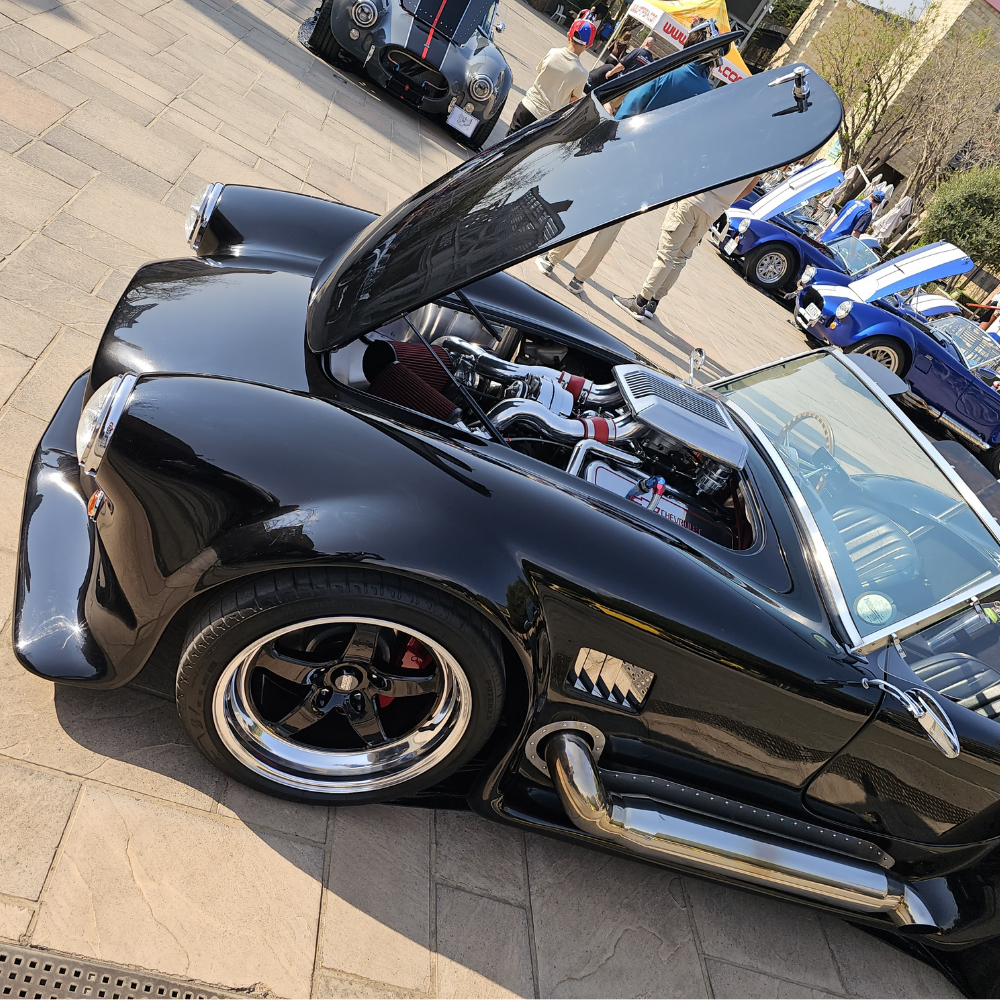
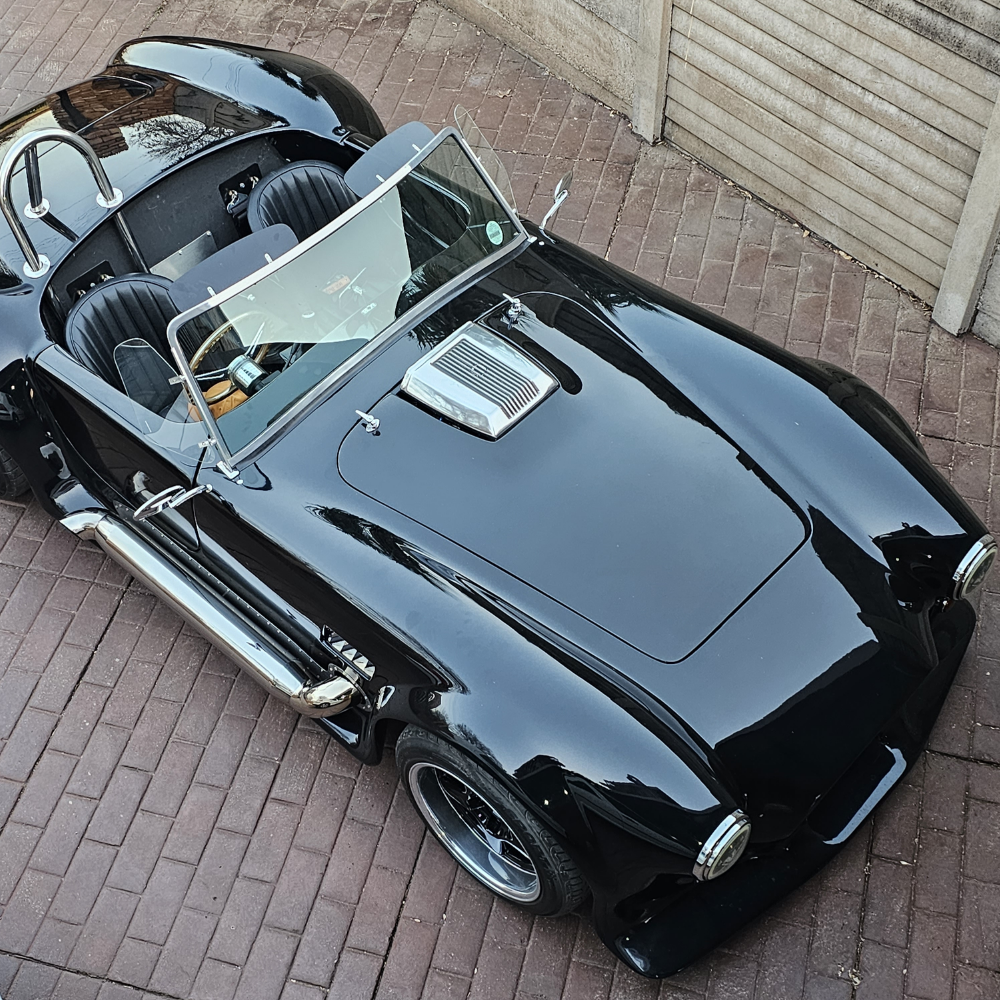
The transformation began with bodywork. I designed wider rear arches first — they were essential for what was coming. Then came custom side skirts, followed by front and rear spoilers. The Cobra silhouette remained, but now it looked more planted, more muscular. Purposeful.
I’ll admit — I had so much fun during this phase. It wasn’t just modifying a kit. It was sculpting a personality.
But speed without control is just chaos. And these “Jaguar-based” chassis cars were never famous for sharp handling. That had to change.
Fixing the Foundation
Knowing the car would experience serious acceleration and high-speed loads, I started re-engineering the suspension from the ground up.
A Watts linkage was introduced to the rear. Stability under load was critical — especially if the car ever decided to launch hard. I wasn’t about to let rear hubs misbehave under boost.
The front geometry was completely reworked:
-
Roll center height adjusted by relocating upper wishbones
-
Bump steer corrected through tie rod length changes and steering rack repositioning
-
Increased caster for high-speed stability
-
All while keeping the wheels perfectly centered in the arches
It was a mission.
Custom anti-sway bars were fabricated. Adjustable GAZ coilovers were installed, with spring rates meticulously chosen to hit that sweet spot between compliance and control.
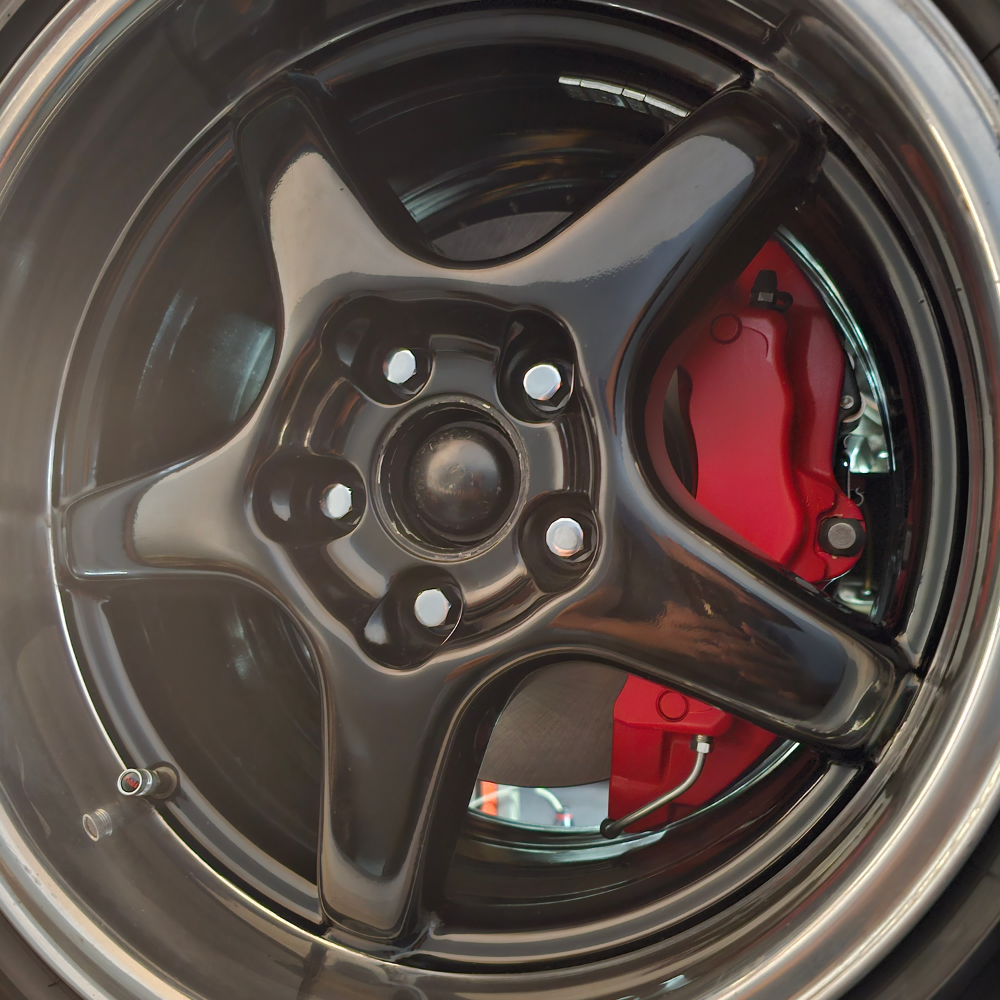
Braking had to match the performance. Brembo 17Z front calipers with 330mm rotors were fitted — serious stopping power for a serious machine.
At this point, the chassis was ready for war.
Now it needed a heart.
The HART(d) Decision
Originally, I considered a built turbo small block. LS power crossed my mind too. Logical. Modern. Proven.
But something about it felt wrong.
The car needed displacement. It needed character. It needed torque that hits like a hammer.
Sitting in the shop was a Big Block Chevy 454 (7.4L) Gen VI. Stock numbers? 290hp and 555Nm.
Obviously… not enough.
So I thought — what if?
Fitting it wasn’t simple. The front pulley sat too far forward. The engine wouldn’t clear the crossmember. I needed another 90mm I didn’t have. The rear corners of the heads pressed hard against the tunnel.
So what do you do?
As fabricators say: there’s nothing a grinder can’t fix.
Weeks of cutting, reshaping, fiberglass work, and refining followed. Slowly, everything cleared. The engine was shifted 90mm rearward — a huge win for weight distribution.
It wasn’t just installed. It was positioned with intent.
Building Boosted Big Block Power
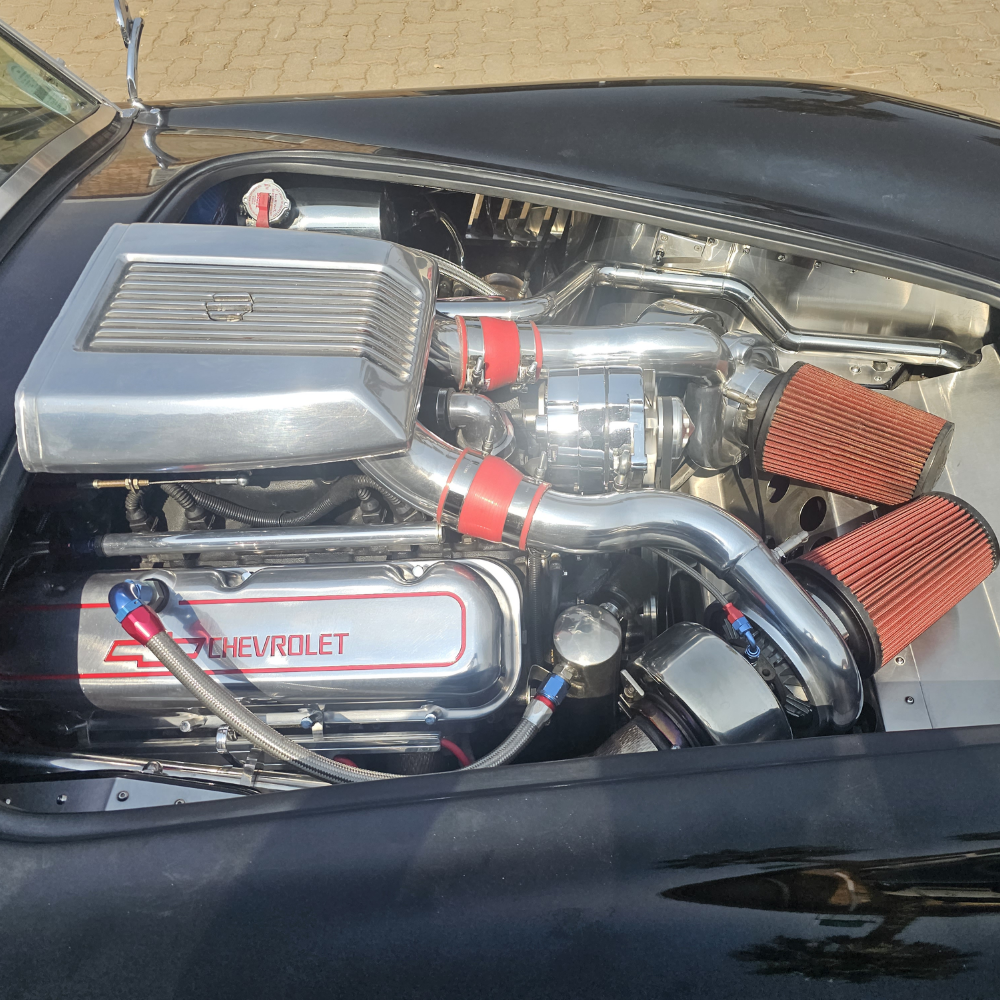
The 454 was brought into the modern era with forced induction in mind:
-
Hydraulic roller Extreme Energy cam
-
High-rate springs
-
Chromoly pushrods and upgraded retainers
-
RPM Air-Gap intake manifold
-
Forged pistons and rods
-
ACL race bearings
-
MLS gaskets
-
ARP hardware throughout
Then came the real magic:
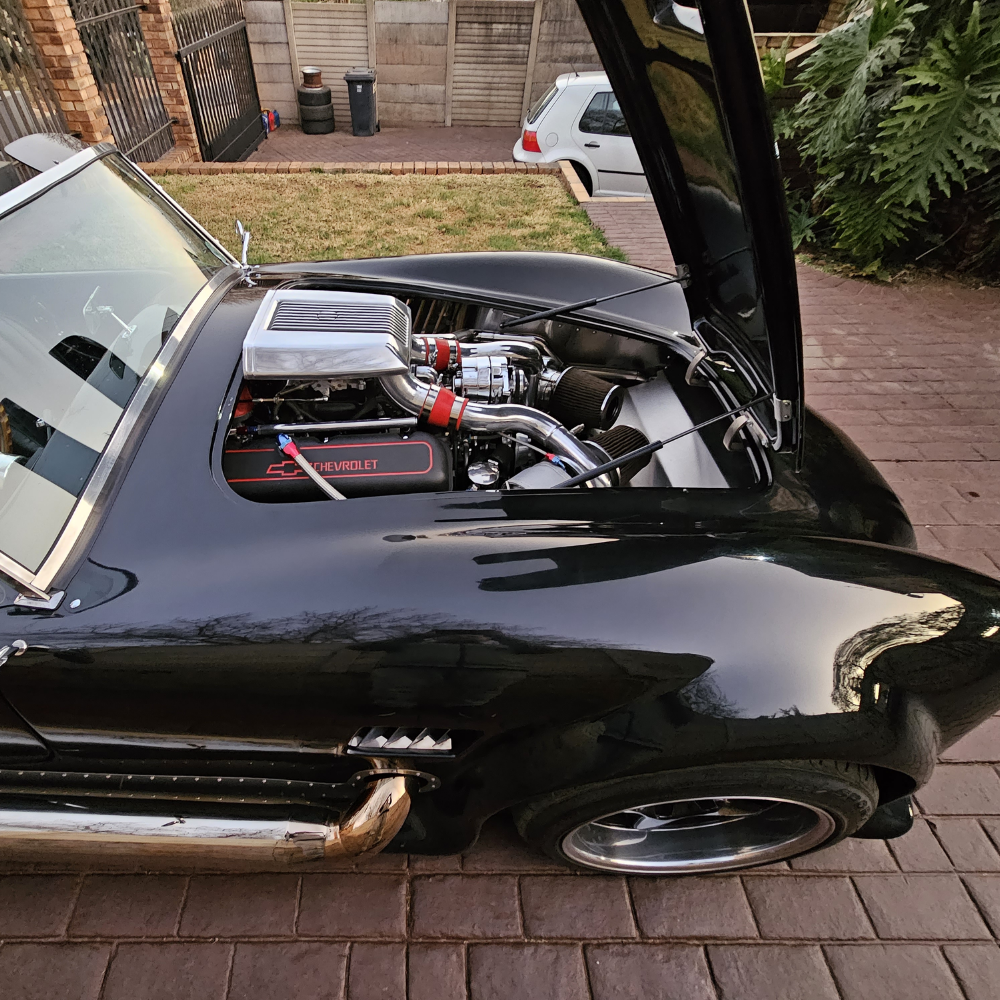
A pair of Holset HX35 hybrids feeding compressed air into a custom merge plenum, controlled by a billet 4-barrel throttle body. Dual 50mm blow-off valves handle pressure release.
Fuel? Straight 95 octane pump fuel delivered through 1000cc Bosch Motorsport injectors.
Charge cooling is handled chemically via a custom-built water-methanol injection system, fully ECU-controlled.
With the boost controller set to just 0.4 bar, the results were already absurd:
-
606 hp and 956 Nm at the rear wheels
-
Approximately 700 hp and 1100 Nm at the flywheel
Power is transmitted through a ZF 6-speed manual gearbox from a BMW 330d, and laid down via a rare and strong DANA 44 2.88 LSD sourced from a late V12 Jaguar XJ-S.
Strong. Rare. Capable.
But that wasn’t the end.
Turning It Up
Curiosity always wins.
The boost was increased gradually and now sits at 0.65 bar — right at the point where bravery begins to surrender to common sense.
The engine is capable of well over 1000hp. Realistically, at this setting, it’s likely around 800hp.
In a car this light?
The power-to-weight ratio is unreal.
Torque is flat from 2500 to 5500 rpm. Acceleration isn’t dramatic — it’s relentless. A single, uninterrupted pull. 0–200 km/h happens in seconds. No theatrics. No hesitation.
Just force.
Real World Results
Numbers are one thing. Real-world proof is another.
From a dig. From a roll. Open road pulls.
RS6s. Stage 2 CLS63 AMG (732hp / 1000Nm). Ferraris. Lamborghinis.
It never fell behind.
Full throttle on an open stretch and it simply keeps going — boost building, big block roaring, twin turbos feeding an appetite that never seems satisfied.
The Result
This isn’t just another Cobra.
It’s a wide, boosted, big block monster wrapped in a timeless silhouette. It respects the shape of the past but absolutely refuses to behave like it belongs there.
The Black Cobra Twin Turbo isn’t about nostalgia.
It’s about rewriting expectations.