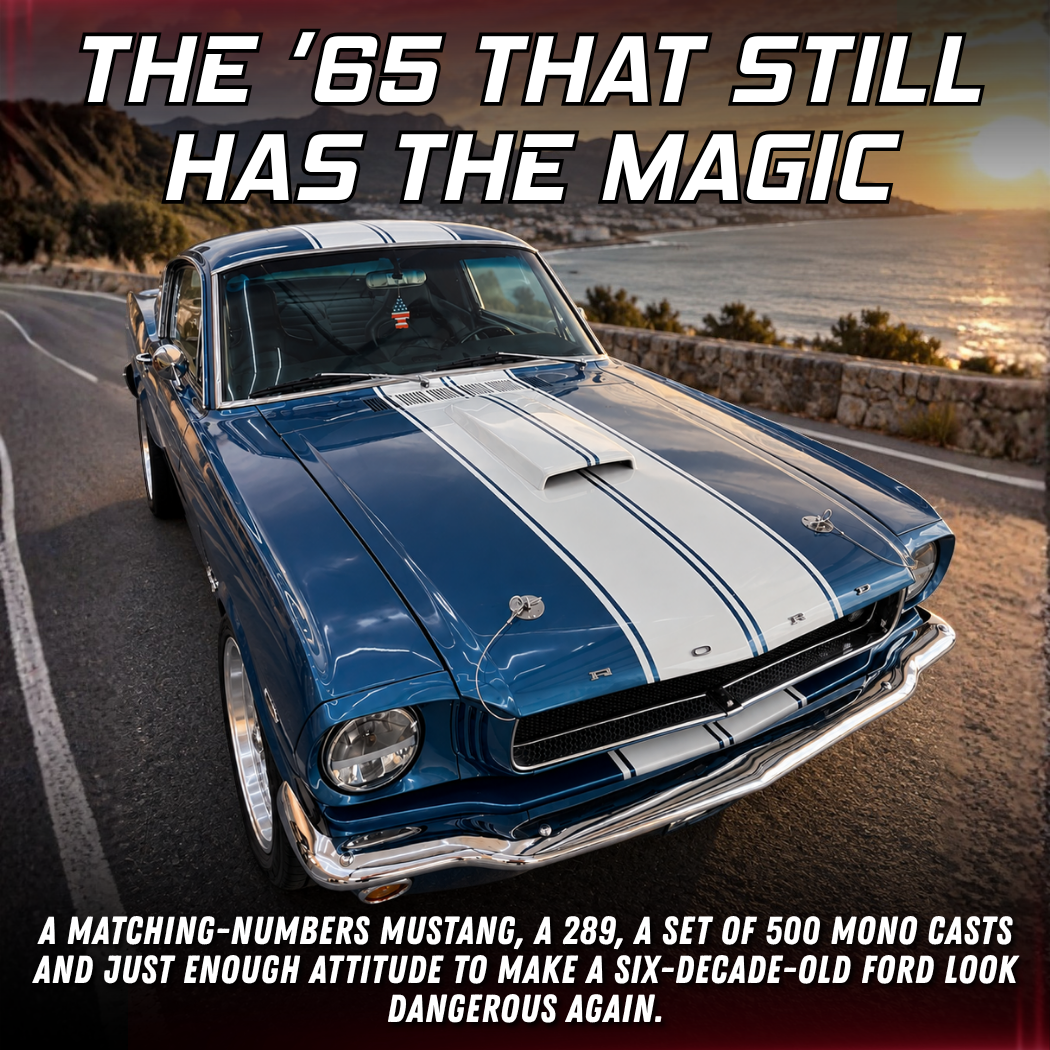
A matching-numbers Mustang, a 289, a set of 500 Mono Casts and just enough attitude to make a six-decade-old Ford look dangerous again.
There are plenty of Mustangs.
There are fast Mustangs, restored Mustangs, modified Mustangs, over-restored Mustangs and Mustangs that have been chopped, tubbed, blown, stroked and turned into something their mothers wouldn’t recognise.
And then there are 1965 Mustangs.
The first-year cars have a different kind of gravity. They don’t need a massive engine sticking through the bonnet or a set of 20-inch wheels to get attention. Park one outside a coffee shop and people who couldn’t tell a Holley from a toaster will still walk over to have a look.
This one stopped us in our tracks.
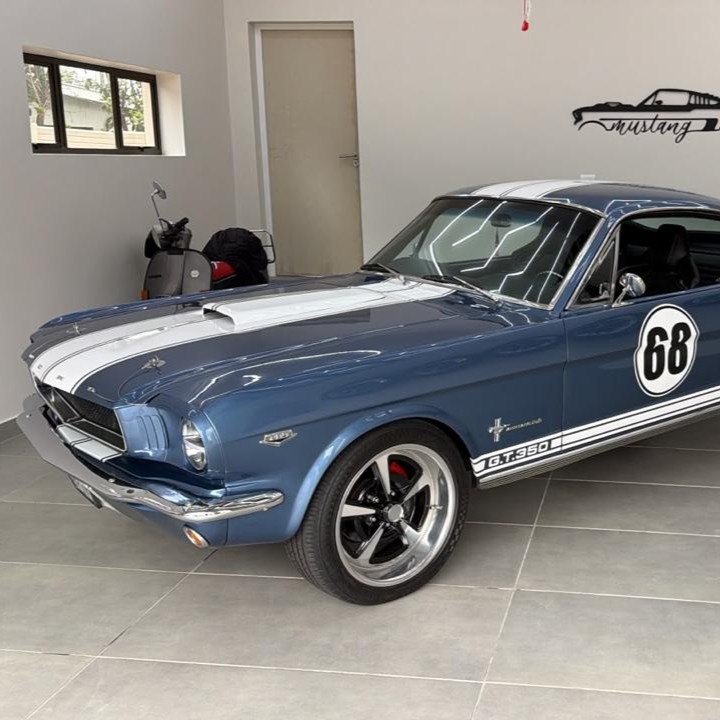
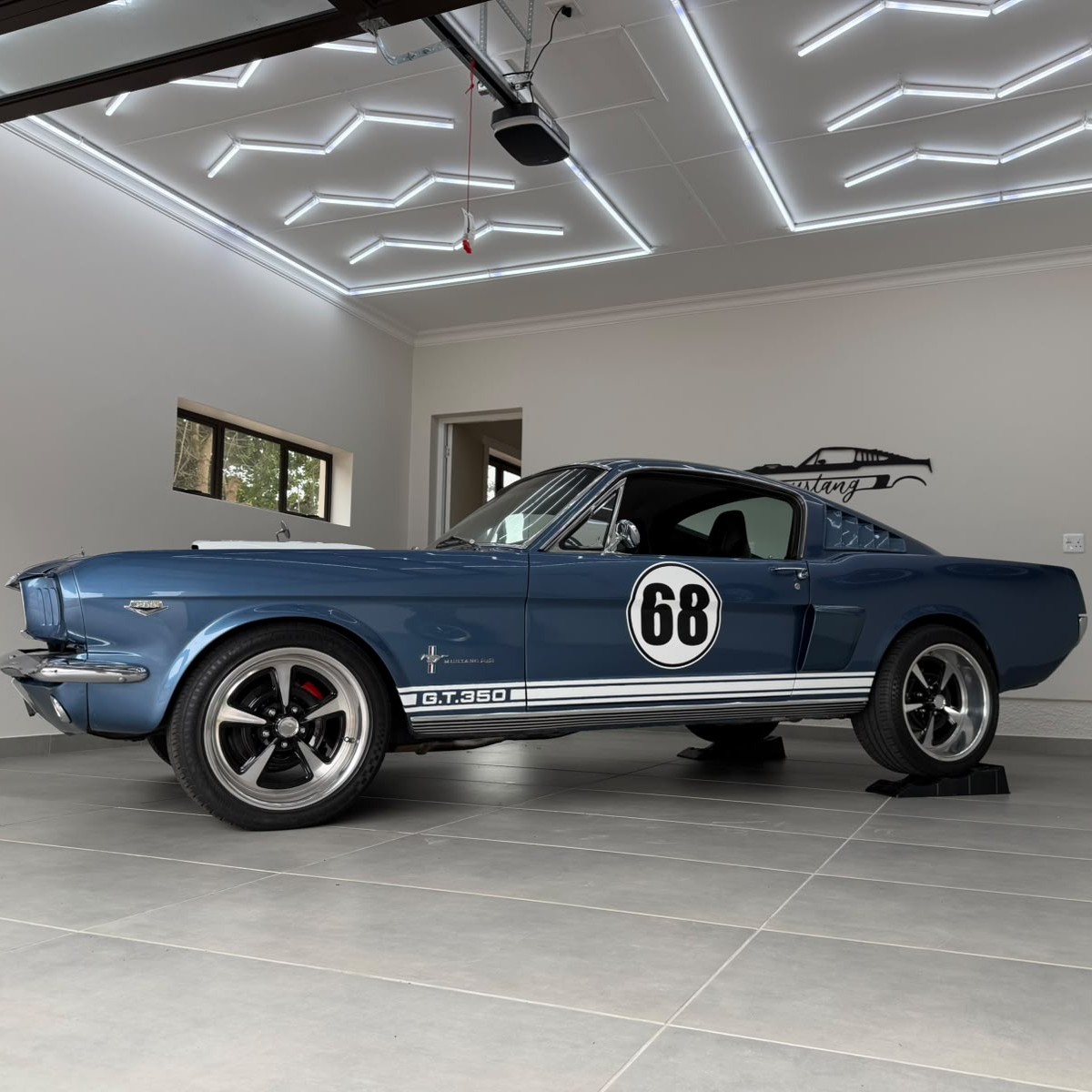
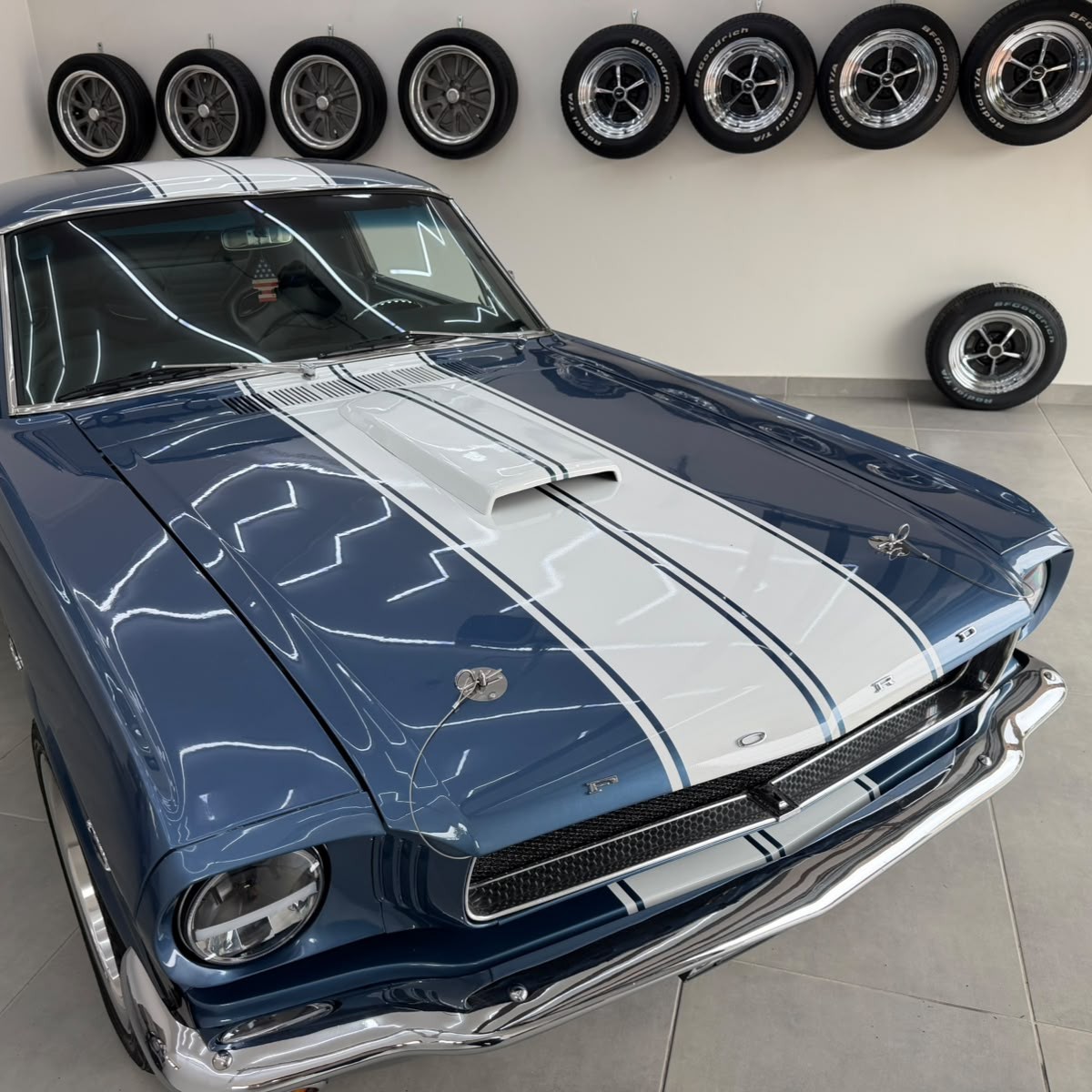
Sitting in a spotless workshop, the deep blue bodywork reflecting the LED lights across its bonnet, this Mustang has that rare combination of old-school authenticity and modern attitude. The white stripes run over the nose and along the flanks, the number 68 gives it a hint of race-car swagger, and those five-spoke American Racing 500 Mono Cast wheels give the whole thing a stance Ford’s designers in 1965 never could have imagined.
But the first thing that catches your eye isn’t the wheels.
It’s the shape.
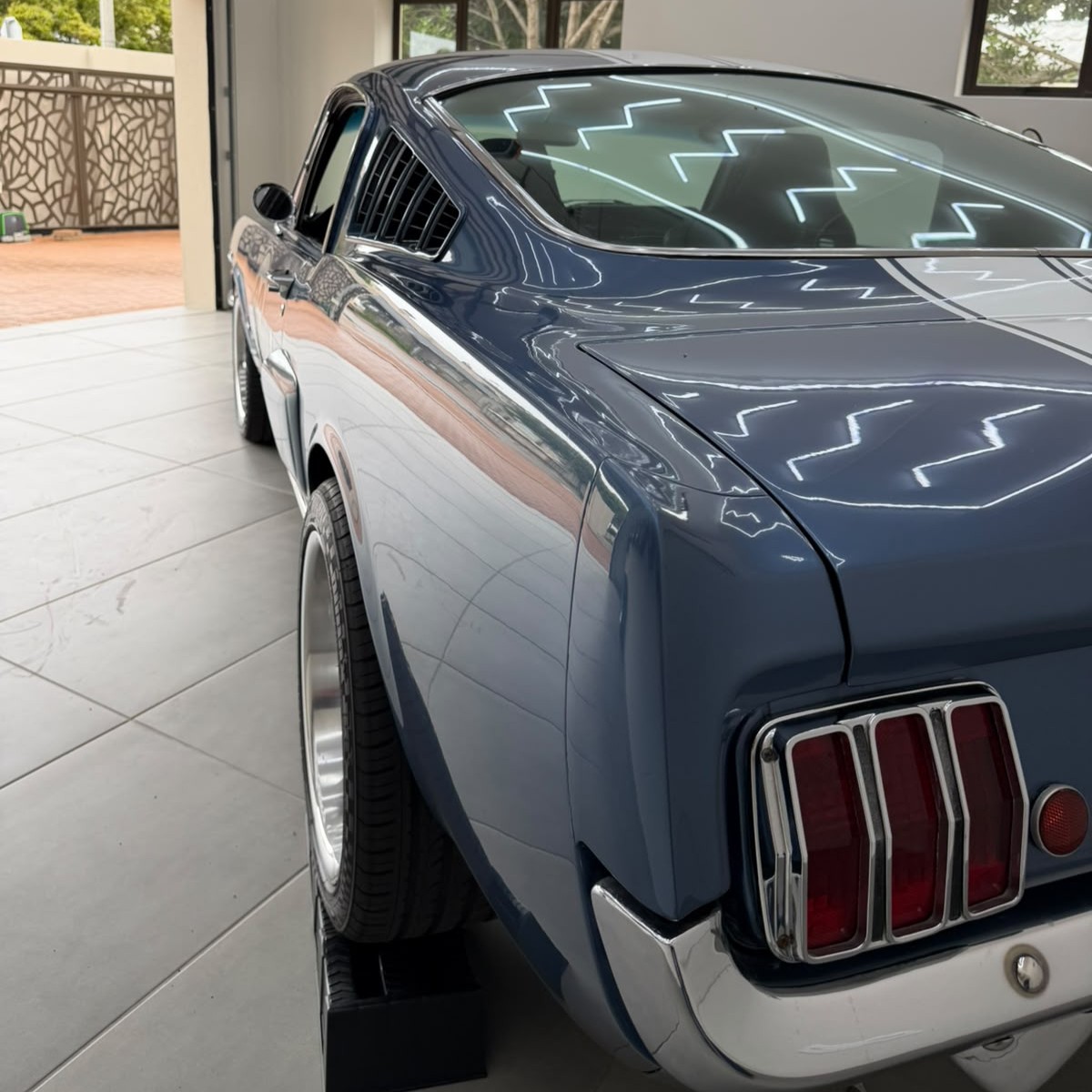
That long nose. That roofline. Those rear haunches.
Sixty years on, the proportions still look right.
That’s the trick with a great car. Time doesn’t make it look old. Time proves the design was right in the first place.
THE 289 IS THE HEART OF IT
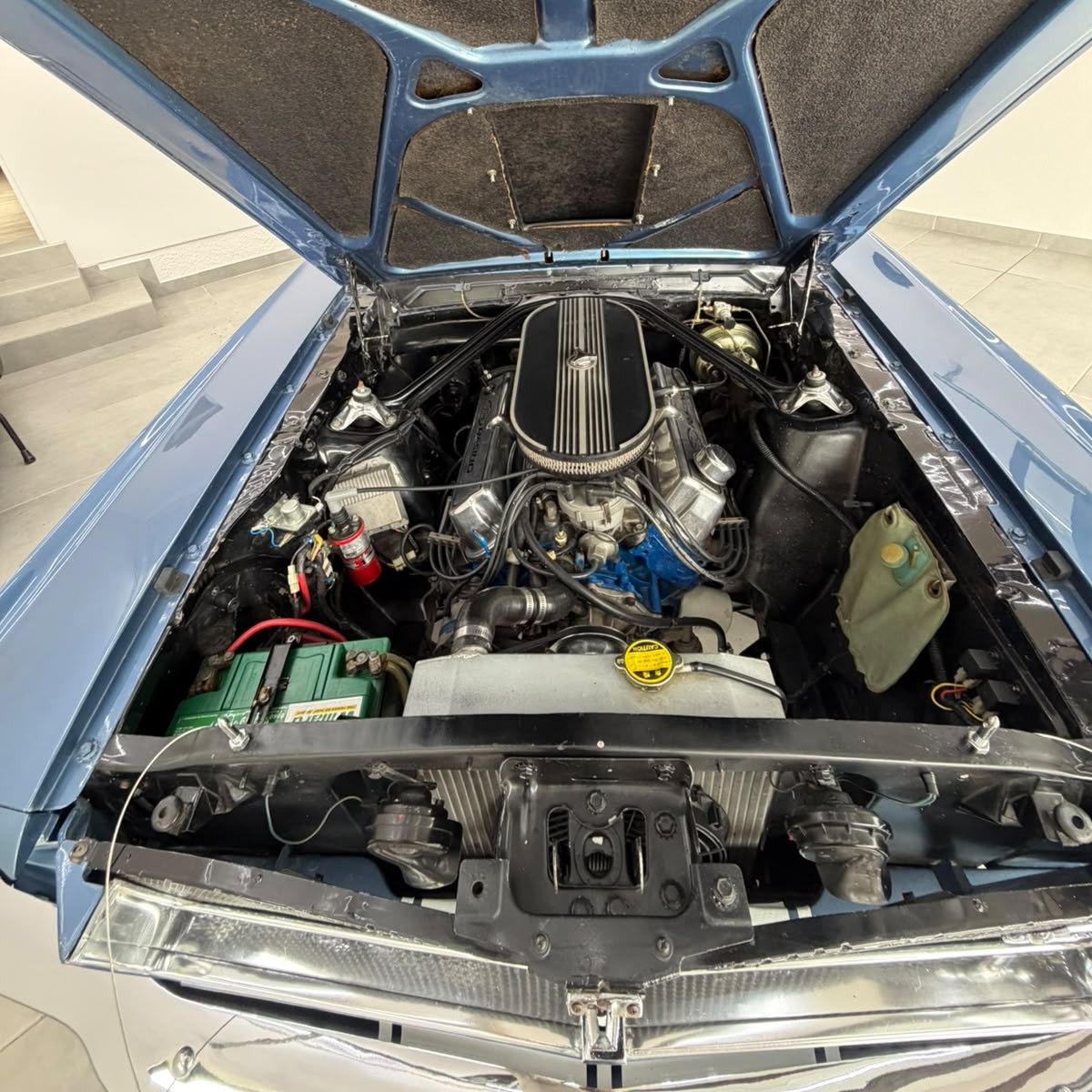
Pop the bonnet and the Mustang story gets even better.
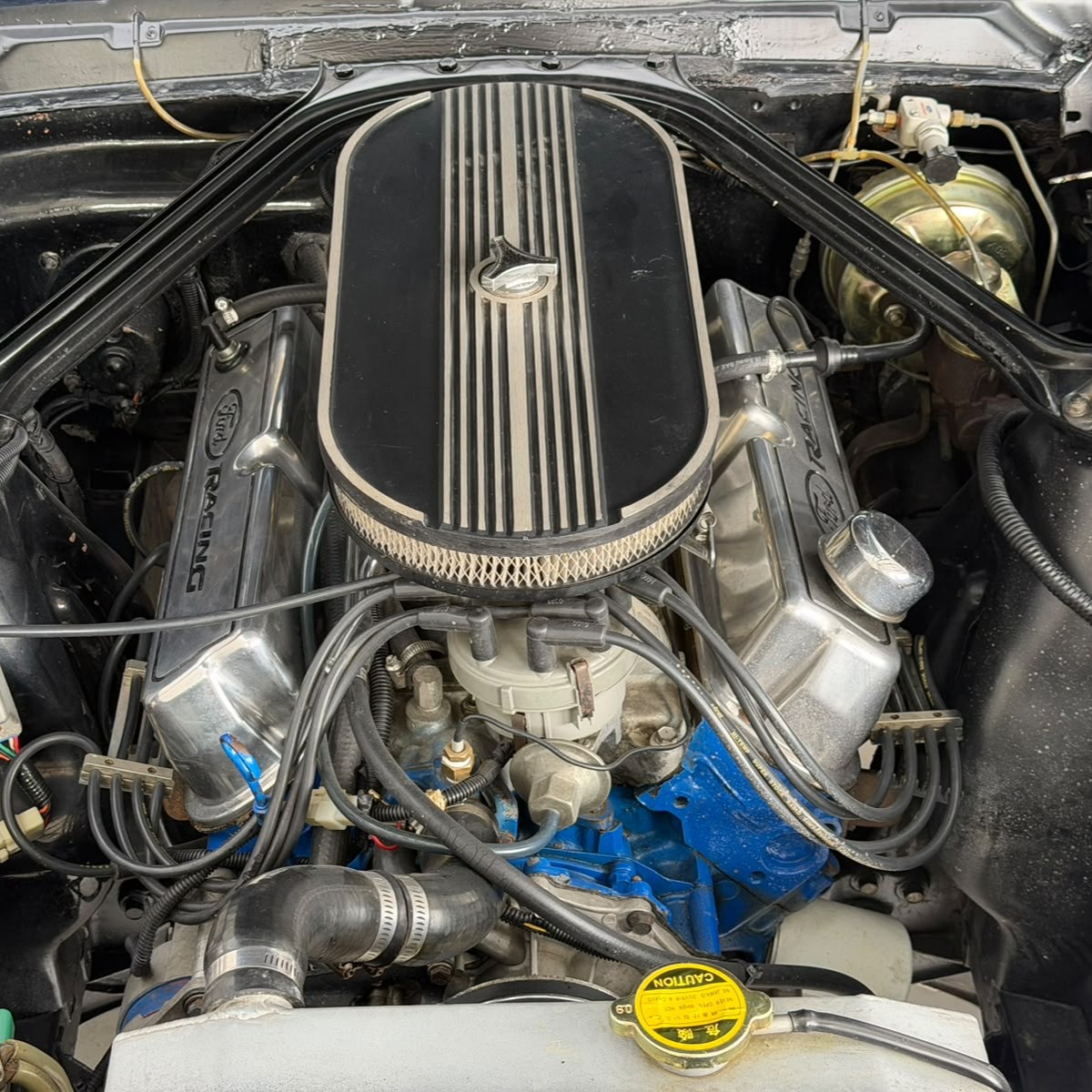
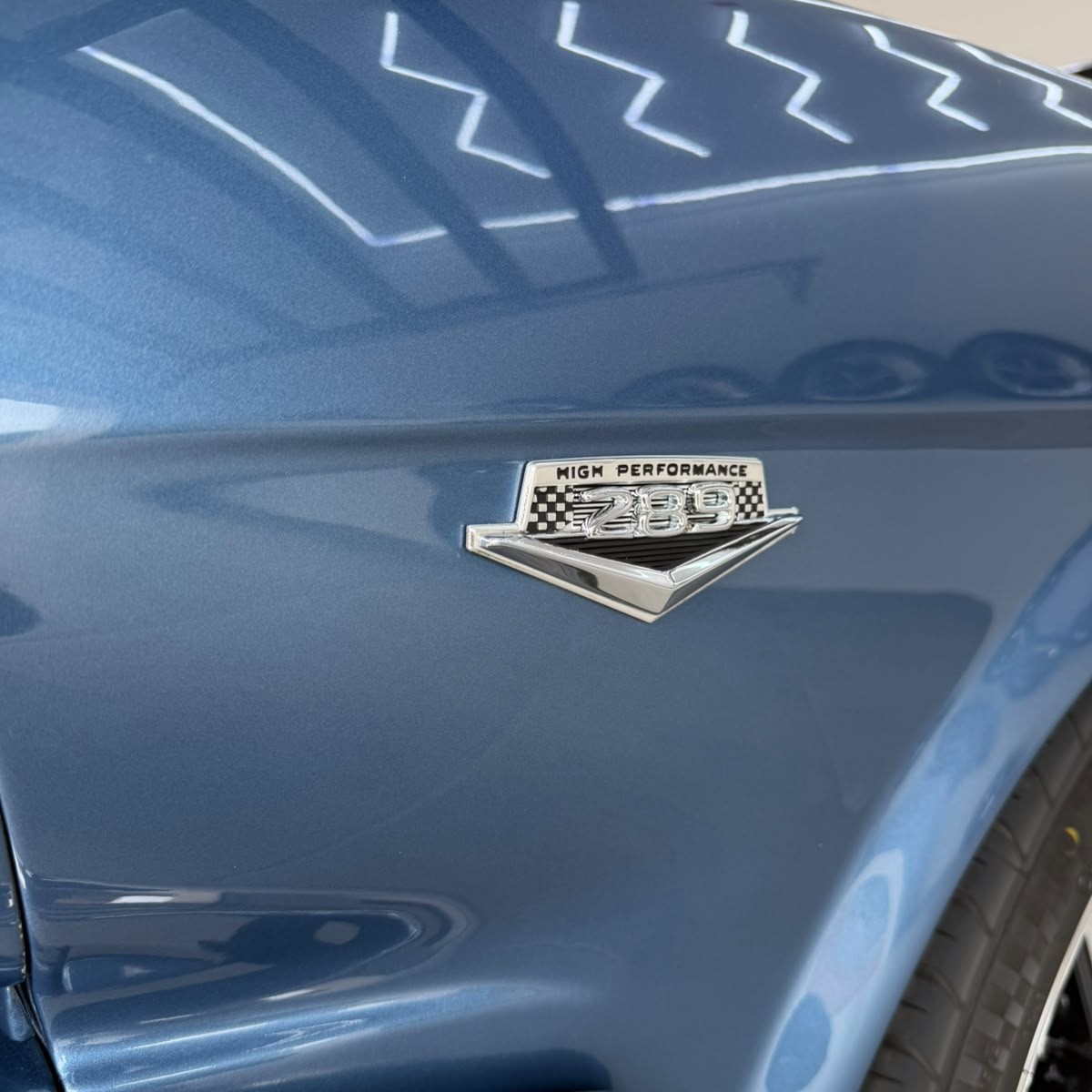
This car carries the legendary Ford 289 V8, wearing its High Performance 289 badging, and according to the owner, this isn’t some collection of replacement parts assembled over the decades. It’s a matching-numbers car, with even the original gearbox still in place.
That’s a big deal on a car that’s been around since the Beatles were still changing the world.
Mustangs have been modified forever. They’ve been dragged, raced, cruised, customised and rebuilt by generations of owners. Finding one that has retained its original mechanical identity while still looking this damn good is worth paying attention to.
And that’s where this car gets interesting.
It hasn’t been locked away and preserved like a piece of furniture.
It’s been cleaned up and improved.
That’s a very different thing.
THE RIGHT KIND OF RESTOMOD
Look inside and you’ll find another example of the approach.
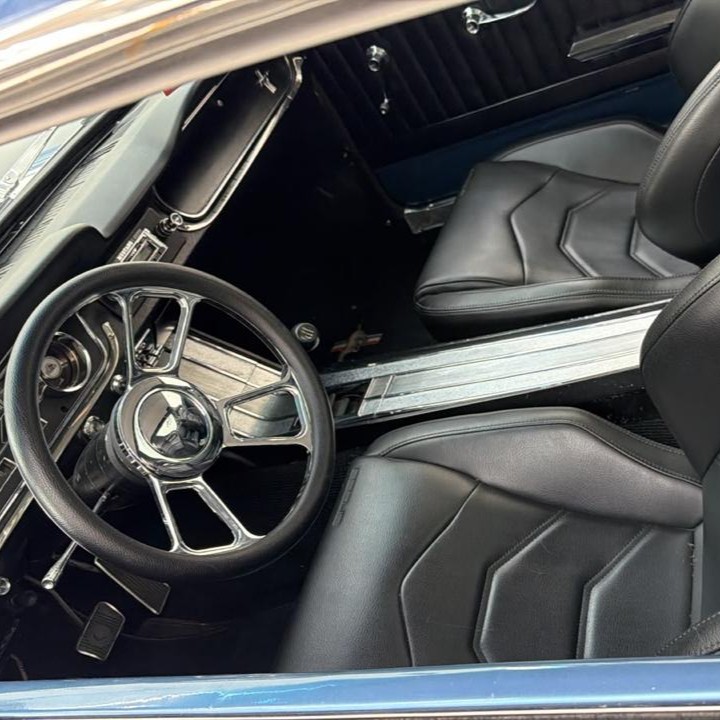
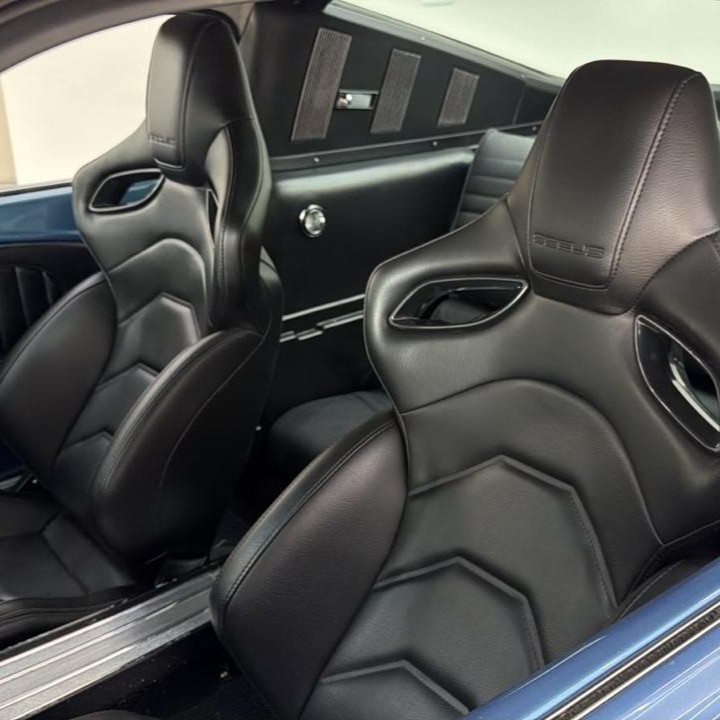
The original Mustang interior has been given a more purposeful feel with upgraded black sports seats. They’re modern enough to look at home in a performance car, but they don’t turn the cabin into some generic aftermarket interior.
The steering wheel has also been upgraded.
That’s about it.
No attempt has been made to bury the Mustang beneath a mountain of modern equipment.
The best restomods understand that you’re not trying to build a new car.
You’re trying to make an old car better without destroying the reason you fell in love with it.
This Mustang gets that balance.
THOSE WHEELS CHANGE EVERYTHING
Then there’s the stance.
The American Racing 500 Mono Cast wheels are one of those details that can completely change the attitude of a classic car without making it look wrong.
The black centres and machined outer sections sit beautifully against the blue paint, while the five-spoke design gives the car a tougher, more contemporary presence.
Look at the Mustang from the side and the effect is obvious.
This isn’t a restored car sitting on skinny original-style wheels waiting for Sunday morning.
It looks ready to be driven.
That’s the whole point.
A Mustang should look like it wants to move.
BLUE ON BLUE
The colour is another reason this car works so well.
It’s a deep metallic blue, rich enough to show every curve in the bodywork and dark enough to make the chrome and white graphics pop.
Ford offered several blues for the 1965 model year, including Caspian Blue, and the shade on this car appears very close to it. Without the original factory identification plate, we’re not going to pretend we can definitively tell you the original paint code.
But sometimes you don’t need a paint code to know when a colour works.
This one works.
The reflections running across the bonnet and front fenders show just how good the finish is. More importantly, the owner tells us the car is rust-free.
On a 60-year-old Mustang, that’s not a throwaway detail.
That’s something you want to know.
THE CAR THAT CREATED A GENERATION
The Mustang wasn’t simply another Ford.
It changed the game.
When the Mustang arrived, it created a formula that would define an entire category of American performance cars. Long bonnet, short rear deck, compact dimensions, available V8 power and a price that put the dream within reach of ordinary buyers.
More than half a million Mustangs were produced for the 1965 model year.
And yet, somehow, seeing one today still feels like an event.
Maybe it’s because we’ve spent decades seeing Mustangs evolve.
The Mustang has grown bigger, faster, more sophisticated and considerably more powerful.
But underneath all of that is this car.
The original idea.
The one that started the family.
And standing next to this particular Mustang, you can see exactly why the formula worked.
NOT PERFECT. BETTER.
There is a temptation with classic cars to chase perfection.
Every bolt correct. Every decal original. Every component exactly as it left Dearborn.
That’s one way to do it.
But there’s another way.
Take the car you love. Keep the important stuff. Keep the character. Keep the history. Then make the parts that matter to you better.
That’s what has happened here.
The matching-numbers drivetrain remains. The original gearbox remains. The classic body remains. The unmistakable Mustang identity remains.
But the seats are better.
The steering wheel is better.
The wheels give it more attitude.
The paint looks fantastic.
And the car doesn’t look like it’s afraid of being driven.
That’s a combination we can get behind.
SIXTY YEARS LATER
At R1.1 million, this isn’t a cheap ticket into the world of classic Mustangs.
But then, this isn’t just an old Mustang.
It’s a piece of the moment when Ford changed the idea of what an American performance car could be.
It’s the shape that every kid who grew up drawing cars knew how to draw.
It’s the V8, the long bonnet, the fastback roof, the chrome and the running horse.
It’s the car that launched an automotive dynasty.
And this one has survived six decades with its identity intact.
Standing there under those lights, blue paint glowing, 289 badge catching the eye and those 500 Mono Casts filling the arches, there’s only one thought that keeps coming back.
Ford got the Mustang right the first time.
Everything since has just been an argument over how to improve it.